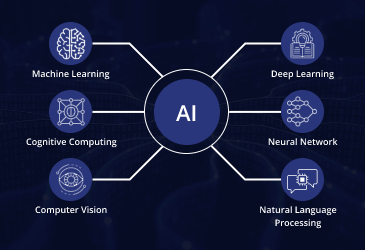

In the digital age, the term Artificial Intelligence (AI) is everywhere. From smart assistants like Siri and Alexa to self-driving cars and advanced robotics, AI is no longer a futuristic concept but a reality that impacts our daily lives. For students, understanding AI is crucial as it shapes the future of technology, industry, and even society. In this guide, we will explore what AI is, its types, applications, challenges, and its impact on various fields.
1. What is Artificial Intelligence?
At its core, Artificial Intelligence refers to the simulation of human intelligence in machines that are programmed to think, learn, and make decisions. In essence, AI enables computers and robots to perform tasks that typically require human intelligence, such as understanding language, recognizing images, solving problems, and making decisions.
AI systems are built upon data, algorithms, and computational models that enable them to mimic cognitive functions such as reasoning, perception, learning, and problem-solving. AI can be divided into two broad categories:
- Narrow AI (Weak AI): This type of AI is designed to perform a specific task, such as facial recognition, voice assistants, or recommendation algorithms. It operates within predefined parameters and lacks general intelligence.
- General AI (Strong AI): This is an advanced form of AI that aims to possess the same cognitive abilities as humans. General AI would be capable of understanding any intellectual task a human can do. As of now, this form of AI remains theoretical and has not yet been developed.
2. How Does Artificial Intelligence Work?
AI works by combining large amounts of data with powerful algorithms. It relies on machine learning, a subfield of AI that enables systems to learn and improve over time based on experience. Here’s how it generally works:
- Data Collection: AI requires vast amounts of data to learn. This data can include anything from text and images to sensor readings and transaction logs.
- Algorithm Development: AI systems are built using algorithms — step-by-step procedures that help the machine process data and make decisions. These algorithms are designed to enable the system to identify patterns, correlations, and insights from data.
- Training: During training, the AI system processes data through its algorithms to improve its accuracy. For example, in machine learning, an algorithm is trained using labeled data (e.g., images of cats and dogs) to identify patterns and make predictions.
- Decision-Making and Learning: Once trained, AI can use the patterns it has learned to make predictions, automate tasks, and even adapt to new situations or environments through reinforcement learning, where AI receives feedback to improve its actions over time.
3. Types of Artificial Intelligence
AI encompasses various subfields, each focused on different aspects of intelligence. The three major types of AI include:
3.1 Machine Learning (ML)
Machine learning is a subset of AI that allows machines to automatically improve their performance based on experience without explicit programming. It involves developing algorithms that enable computers to learn from data. Some common types of machine learning include:
- Supervised Learning: The machine learns from labeled data. It is provided with input-output pairs and tries to learn the relationship between them.
- Unsupervised Learning: The machine learns from unlabeled data and attempts to find patterns or structures, like clustering similar items together.
- Reinforcement Learning: This type of learning involves training an agent to make decisions by rewarding or penalizing actions. It’s commonly used in gaming and robotics.
3.2 Natural Language Processing (NLP)
Natural Language Processing involves the interaction between computers and human language. It allows machines to understand, interpret, and generate human language. NLP is used in applications like chatbots, translation services, and sentiment analysis.
3.3 Computer Vision
Computer vision is the field of AI that enables machines to interpret and make decisions based on visual inputs like images or videos. It is used in applications such as facial recognition, object detection, and autonomous driving.
3.4 Robotics
AI in robotics combines machine learning and computer vision to build intelligent machines that can perform physical tasks autonomously. These robots are often used in industries like manufacturing, healthcare, and logistics.
4. Applications of Artificial Intelligence
AI has a vast range of applications across various industries. Here are some prominent areas where AI is making a significant impact:
4.1 Healthcare
AI has revolutionized healthcare by enabling more accurate diagnostics, personalized treatments, and even robotic surgeries. Some AI applications in healthcare include:
- Medical Imaging: AI systems can analyze medical images (e.g., X-rays and MRIs) to detect abnormalities like tumors or fractures more quickly and accurately than human doctors.
- Drug Discovery: AI helps researchers analyze vast amounts of data to identify potential drug candidates faster and more efficiently.
- Personalized Medicine: AI algorithms can analyze patient data to recommend individualized treatment plans, optimizing patient outcomes.
4.2 Finance
AI has transformed the financial industry by improving risk assessment, fraud detection, and algorithmic trading. Some applications include:
- Fraud Detection: AI analyzes transaction data in real-time to identify unusual behavior and detect fraudulent activities.
- Robo-Advisors: AI-powered platforms provide automated financial advice to individuals, helping them manage their investments and assets.
4.3 Transportation
The transportation sector has been significantly impacted by AI, particularly in the development of autonomous vehicles. AI is also used in optimizing traffic flow, route planning, and logistics management.
- Self-Driving Cars: Companies like Tesla, Waymo, and Uber are using AI to develop autonomous vehicles that can drive without human intervention.
- Traffic Management: AI helps cities manage traffic by analyzing real-time data to optimize traffic lights and prevent congestion.
4.4 Entertainment
AI plays a significant role in content creation and recommendation systems, enhancing user experiences across various entertainment platforms.
- Recommendation Systems: Platforms like Netflix, Spotify, and YouTube use AI to recommend content based on user preferences and behavior.
- Gaming: AI is used in gaming to create more intelligent non-player characters (NPCs) and dynamic game environments.
4.5 Manufacturing and Industry
AI has revolutionized manufacturing by improving productivity, quality control, and supply chain management.
- Predictive Maintenance: AI analyzes machine data to predict when equipment will fail, allowing for proactive maintenance and reducing downtime.
- Automation: AI-powered robots perform tasks like assembly, packaging, and quality inspection more efficiently and accurately than humans.
5. Benefits and Challenges of Artificial Intelligence
While AI offers numerous advantages, it also presents certain challenges that need to be addressed.
5.1 Benefits of AI
- Increased Efficiency: AI automates repetitive tasks, freeing up human workers to focus on more complex and creative tasks.
- Enhanced Decision-Making: AI systems can process large amounts of data quickly, providing valuable insights that improve decision-making.
- Improved Accuracy: AI systems can reduce human error in fields like medicine, finance, and manufacturing, leading to more reliable outcomes.
5.2 Challenges of AI
- Job Displacement: As AI systems automate tasks, there are concerns about job losses, especially in industries like manufacturing, customer service, and transportation.
- Bias and Fairness: AI systems can inherit biases present in their training data, leading to unfair or discriminatory outcomes. Addressing these biases is crucial for ensuring fairness in AI systems.
- Ethical Concerns: As AI becomes more autonomous, questions about its ethical implications arise, such as the potential for AI to make life-altering decisions without human oversight.
6. The Future of Artificial Intelligence
The future of AI is both exciting and uncertain. As technology advances, AI will continue to evolve and play an even more prominent role in various aspects of life. Some potential future developments include:
- Artificial General Intelligence (AGI): AGI, which aims to replicate human-level intelligence, could revolutionize industries and society. However, it raises ethical concerns about control and safety.
- AI in Education: AI has the potential to revolutionize education by offering personalized learning experiences, intelligent tutoring systems, and real-time feedback.
- AI and Ethics: As AI becomes more advanced, it will be essential to develop frameworks and guidelines to ensure that AI is used responsibly and ethically.
7. Conclusion
Artificial Intelligence is no longer a concept confined to science fiction; it is here and now, shaping the future of every industry. From healthcare and finance to entertainment and transportation, AI’s impact is profound and far-reaching. As students, understanding the principles, applications, and challenges of AI is essential for navigating a future where AI will play an even larger role. By embracing AI, we open up new opportunities for innovation, problem-solving, and human advancement. However, it is equally important to approach AI with a sense of responsibility, ensuring that it is developed and deployed ethically and for the greater good.
As AI continues to evolve, so too must our understanding of its capabilities and limitations. In the coming years, AI is poised to be an indispensable tool for shaping a more intelligent and interconnected world.