
A standout resume can make all the difference in landing your dream job. In today’s competitive job market, a well-crafted resume is essential to catching the attention of hiring managers and securing interviews. Whether you’re a fresh graduate or a seasoned professional, your resume is your marketing tool that showcases your skills, experiences, and qualifications. Here, we’ll guide you through the essential steps to creating a resume that stands out from the crowd.
1. Understand the Purpose of a Resume
Before diving into the details of writing your resume, it’s important to understand its purpose. A resume is a summary of your career and qualifications, serving as your first introduction to potential employers. Its goal is to give hiring managers a quick snapshot of who you are, your skills, and what you can bring to the table. You have mere seconds to make an impression, so it’s vital to ensure your resume effectively communicates your value.
2. Choose the Right Resume Format
The format of your resume plays a critical role in how it’s perceived by employers. There are three main types of resume formats: chronological, functional, and combination.
- Chronological Resume: This is the most traditional format, listing work experience in reverse chronological order (starting with the most recent job). It’s ideal for people with a solid work history in a specific field.
- Functional Resume: This format focuses on your skills and accomplishments rather than your work history. It’s best suited for those with gaps in employment or those changing careers.
- Combination Resume: This format combines elements of both chronological and functional resumes, highlighting skills and experience while also presenting a timeline of employment. It’s a good choice for job seekers with diverse skill sets or those in specialized fields.
3. Craft a Compelling Resume Header
Your resume header is the first thing hiring managers will see. It should be clear, professional, and easy to read. Include the following details in the header:
- Full Name: Use your legal name or the name you want to be addressed by professionally.
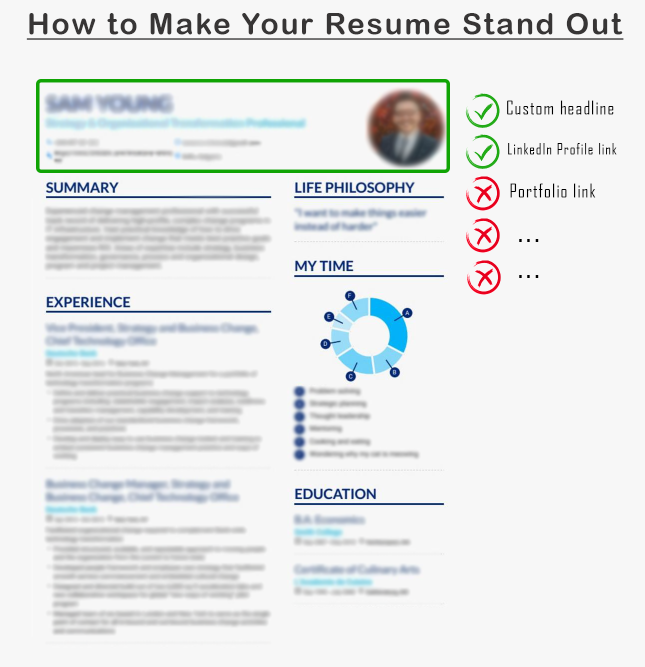
- Contact Information: Include your phone number, professional email address, and LinkedIn profile. Avoid using informal or personal email addresses (e.g., jenny_123@gmail.com). If applicable, you can also add links to your portfolio or personal website.
- Location: Include your city and state, or simply state “open to relocation” if you’re flexible with location.
Example:
yamlCopyEditJohn DoePhone: (123) 456-7890 | Email: john.doe@example.com | LinkedIn: linkedin.com/in/johndoe | Portfolio: johndoe.comNew York, NY
4. Write a Strong Resume Objective or Summary
A resume objective or summary statement provides a brief introduction to who you are as a professional. This section should be tailored to the specific job you’re applying for and highlight your key qualifications.
- Resume Objective: Ideal for entry-level candidates or those changing careers. Focus on your goals and how you want to contribute to the organization.
- Resume Summary: Best for professionals with significant experience. Summarize your qualifications, key achievements, and skills that align with the job you’re applying for.
Example Objective:
“Motivated marketing graduate seeking to leverage digital marketing expertise to drive online engagement and sales growth for a dynamic tech company.”
Example Summary:
“Experienced project manager with over 8 years of success in leading cross-functional teams. Proven track record in delivering high-quality projects on time and within budget. Expertise in Agile methodology, risk management, and stakeholder communication.”
5. Highlight Relevant Work Experience
The work experience section is the heart of your resume. This is where you’ll showcase your past roles, responsibilities, and accomplishments. Here are some tips to make your experience stand out:
- Use Action Verbs: Start each bullet point with a strong action verb (e.g., led, developed, implemented, managed, achieved). This will help convey a sense of accomplishment and initiative.
- Quantify Achievements: Whenever possible, include numbers or percentages to quantify your achievements. This provides concrete evidence of your contributions.
- Tailor to the Job: Align your work experience with the requirements of the position you’re applying for. Highlight the skills and experiences most relevant to the job.
Example:
Marketing Manager | ABC Company | June 2018 – Present
- Developed and executed marketing campaigns that increased lead generation by 30%.
- Managed a team of 5 marketing professionals, overseeing daily operations and strategy.
- Analyzed customer data to identify trends, resulting in a 20% increase in customer retention.
6. Showcase Your Skills
The skills section of your resume is where you can highlight both hard and soft skills relevant to the job. Hard skills refer to specific technical abilities (e.g., software proficiency, programming languages), while soft skills include interpersonal abilities (e.g., communication, teamwork).
- Hard Skills: These are measurable and typically learned through education or training. Examples include proficiency in Microsoft Excel, graphic design software, foreign languages, or project management tools.
- Soft Skills: These are often more subjective but equally important. Examples include leadership, problem-solving, time management, and adaptability.
Example: Skills:
- Microsoft Office Suite (Excel, PowerPoint, Word)
- Project Management (Agile, Scrum)
- Digital Marketing (SEO, Google Analytics, Email Campaigns)
- Excellent Communication and Negotiation Skills
7. Education and Certifications
While your work experience is crucial, your educational background can also be important, especially for entry-level positions or if you’ve recently graduated. Include the following details in this section:
- Degree: List your degree(s) and major(s).
- University: Include the name of the institution, graduation date, and location.
- Certifications: If you have any relevant certifications, include them here (e.g., PMP, Google Analytics, First Aid).
Example: Education:
Bachelor of Science in Business Administration
XYZ University, Graduated May 2020
Certifications:
Certified Digital Marketing Professional (CDMP) – HubSpot Academy, 2021
8. Include Additional Sections (If Relevant)
Depending on the job and your background, you may want to include additional sections that can provide further value to your resume. Some common sections include:
- Volunteer Experience: If you have relevant volunteer work, especially in a leadership or field-related capacity, include it here.
- Awards and Honors: Any notable achievements, awards, or recognitions that can set you apart from other candidates.
- Languages: If you speak multiple languages, include them here with your level of proficiency.
- Publications or Projects: If applicable, list relevant publications, projects, or presentations that demonstrate your expertise.
9. Tailor Your Resume to the Job Description
A generic resume may not catch the attention of employers. To make your resume stand out, you must tailor it to each job application. Review the job description carefully and use similar language and keywords to highlight your relevant experience and skills.
Tip: Many companies use Applicant Tracking Systems (ATS) to scan resumes. To improve your chances of passing this system, ensure that your resume includes relevant keywords from the job description.
10. Keep Your Resume Clean and Easy to Read
Your resume should be visually appealing and easy to scan. Hiring managers often spend only a few seconds reviewing each resume, so clarity is key. Here are some formatting tips:
- Font: Use a professional, easy-to-read font like Arial or Calibri in size 10-12.
- Margins: Keep margins between 0.5” and 1” for readability.
- Spacing: Use white space effectively to avoid clutter and improve readability.
- Bullet Points: Use bullet points to break up large chunks of text and make your resume easier to skim.
11. Proofread and Edit
Before submitting your resume, carefully proofread it to ensure there are no spelling or grammatical errors. A resume with mistakes can give a bad impression, so take the time to check for accuracy. It can be helpful to have a friend or colleague review your resume as well for a fresh perspective.
12. Include a Cover Letter (Optional but Recommended)
Although a cover letter is not always required, it can be a valuable addition to your application. A cover letter allows you to provide additional context about your experience and explain why you’re the best fit for the job. Tailor your cover letter to each specific job, highlighting how your skills and experience align with the employer’s needs.
Final Thoughts
Writing a standout resume requires careful attention to detail and a clear understanding of what employers are looking for. By focusing on formatting, relevant experience, skills, and customization, you can create a resume that not only stands out but also gets noticed by hiring managers. Remember, your resume is your personal marketing tool – make it count!