
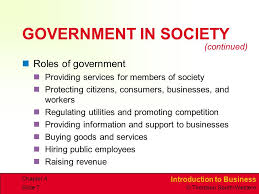

In any society, the government plays a fundamental role in ensuring the well-being and prosperity of its people. It is the entity that has the responsibility of regulating and maintaining public order, providing public services, safeguarding citizens’ rights, and promoting economic stability and growth. Through its various branches and agencies, the government acts as a key driver in shaping the direction of a nation and its people. This article explores the different roles of government in society, highlighting its essential functions, the challenges it faces, and the impact it has on individuals and communities.
1. Governance and Public Order
One of the primary responsibilities of the government is to maintain public order and stability. This involves ensuring that laws are created, enforced, and followed. Governments typically create legal frameworks that set clear guidelines for acceptable behavior and the consequences of violating these laws. These laws can pertain to a wide range of issues such as crime, business regulations, traffic, property rights, and civil liberties.
The enforcement of these laws is critical to the functioning of society. Law enforcement agencies such as the police force, judicial courts, and correctional systems work in tandem to uphold the rule of law. By doing so, governments prevent chaos and disorder, allowing citizens to live in a secure environment where they can thrive and participate in economic, social, and political activities without fear of violence or instability.
Additionally, governments are tasked with protecting citizens from internal and external threats. This role is carried out by military and defense agencies, intelligence services, and emergency response units that ensure national security. In a modern society, defense also extends to cybersecurity, safeguarding against cyber-attacks that can destabilize both public and private institutions.
2. Provision of Public Services
Governments are responsible for providing a wide range of services that are necessary for the functioning of society. These services can be divided into basic services such as education, healthcare, infrastructure, transportation, and public safety.
- Education: One of the government’s core roles is to ensure access to quality education for all citizens, regardless of their socioeconomic background. By funding and regulating educational institutions, the government ensures that people are equipped with the skills and knowledge necessary to contribute productively to society. Education is also a key factor in reducing inequality and promoting social mobility. In many countries, primary and secondary education are free and compulsory, ensuring that every child has an opportunity to learn.
- Healthcare: Governments are often responsible for establishing and maintaining public healthcare systems. These systems aim to provide affordable and accessible medical care to all citizens. Governments often regulate healthcare providers, set public health standards, and invest in public health programs to prevent disease outbreaks and promote health awareness.
- Infrastructure: Governments are also in charge of building and maintaining infrastructure such as roads, bridges, public transportation systems, and utilities like water and electricity. These public services are crucial for economic development, as they facilitate trade, communication, and mobility.
- Public Safety: Ensuring the safety and well-being of citizens is a key function of the government. This includes services such as fire departments, emergency medical services, and disaster response systems that help protect people during crises.
3. Economic Regulation and Development
Governments play a pivotal role in managing the economy. Through economic policies, they can stimulate growth, control inflation, reduce unemployment, and ensure a fair distribution of wealth. The government’s role in economic regulation includes creating policies that regulate businesses, labor markets, and industries to ensure that economic activities are fair and do not exploit the environment or consumers.
- Monetary Policy and Fiscal Policy: Governments use monetary policies to control the money supply and interest rates, while fiscal policies involve government spending and taxation. These tools allow governments to manage economic stability and growth. For example, during a recession, a government may lower taxes or increase spending to stimulate demand in the economy, while in times of inflation, it may raise taxes or cut spending to control excess demand.
- Social Welfare Programs: Governments are also responsible for establishing social safety nets for their citizens. These programs provide financial assistance to individuals and families in times of need, such as unemployment benefits, pensions, and food assistance. Social welfare programs help reduce poverty and income inequality, promoting social cohesion and stability.
- Regulation of Business Practices: The government plays a vital role in regulating business activities to ensure fair competition, prevent monopolies, and protect consumers. Agencies such as the Federal Trade Commission (FTC) in the United States or the Competition Commission in the United Kingdom ensure that businesses adhere to ethical standards, prevent fraud, and promote innovation.
- Environmental Protection: Governments have an increasingly important role in environmental protection. They establish regulations to limit pollution, preserve natural resources, and encourage sustainable practices. Climate change, resource depletion, and pollution are global challenges that require coordinated government action to address.
4. Protection of Rights and Liberties
Another critical role of the government is to protect the rights and freedoms of its citizens. Governments must safeguard individual liberties while balancing them against the needs of society as a whole. This includes protecting rights such as freedom of speech, the right to vote, the right to assemble, and the right to a fair trial.
- Human Rights Protection: In democracies, governments are tasked with upholding human rights laws that ensure citizens are not subjected to discrimination, violence, or exploitation. Governments can use their legal systems to protect individuals from abuses by others, such as discrimination based on race, gender, religion, or disability.
- Democratic Governance: In democratic societies, governments are elected by the people to serve the public good. They are accountable to the citizens and must operate transparently, respecting the rule of law and ensuring that everyone’s voice is heard. This is achieved through elections, civic participation, and an independent judiciary.
5. Social Justice and Equality
Governments play a role in promoting social justice by addressing inequalities within society. They are responsible for enacting policies that promote equal opportunities, particularly in areas such as education, healthcare, employment, and housing.
- Anti-discrimination Laws: Governments create laws to prevent discrimination based on race, gender, age, religion, sexual orientation, and disability. These laws aim to create a more equitable society where all individuals have the same opportunities to succeed.
- Economic Equality: Governments can work to reduce wealth inequality through progressive tax systems and by investing in programs that support lower-income families. Policies such as minimum wage laws, affordable housing programs, and subsidies for healthcare and education help reduce disparities between rich and poor citizens.
- Support for Marginalized Groups: Governments often implement programs to support marginalized communities, such as indigenous people, refugees, and disabled individuals. These programs can include affirmative action policies, social welfare benefits, and access to specialized services to help these groups integrate into society.
6. International Relations and Diplomacy
On the global stage, governments are responsible for representing their countries in international relations. This includes diplomacy, trade agreements, defense alliances, and participation in international organizations such as the United Nations (UN) and the World Trade Organization (WTO).
Governments negotiate treaties and agreements with other nations to protect their interests, resolve conflicts, and promote international cooperation on issues such as climate change, public health, and economic development. Through diplomacy, governments work to build peaceful and mutually beneficial relationships with other countries, fostering global stability and prosperity.
7. Challenges Faced by Governments
While governments play a vital role in society, they also face numerous challenges. These include political polarization, corruption, bureaucratic inefficiency, economic crises, and the growing complexity of global issues like climate change and terrorism. Governments must balance competing interests, navigate global uncertainties, and ensure that their policies are inclusive and effective.
One of the most significant challenges governments face today is addressing inequality. Whether in the form of economic disparity, access to healthcare, or educational opportunities, inequality remains a persistent issue in many countries. Governments must implement strategies that promote social mobility and create opportunities for all citizens, regardless of their background.
Conclusion
The role of government in society is multifaceted and essential to the well-being of citizens. From ensuring public safety and order to promoting economic stability and protecting rights, the government serves as the foundation upon which societies are built. Governments must continuously adapt to the changing needs of society and work toward creating equitable and sustainable systems for all. By fulfilling their responsibilities effectively, governments can create a more just, secure, and prosperous society for future generations.


