
Study Rhino – Making History Make Sense
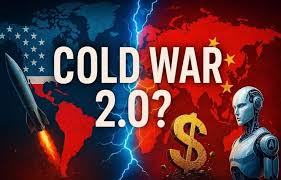
The Cold War wasn’t your typical war with tanks and trenches. It was a complex and often invisible battle between two global superpowers—the United States and the Soviet Union—that lasted from the end of World War II in 1945 until the collapse of the Soviet Union in 1991. It involved ideological rivalry, nuclear arms races, espionage, proxy wars, and diplomatic maneuvering. This conflict didn’t just reshape politics; it influenced technology, education, pop culture, and international relations for decades.
Let’s dive into what made the Cold War such a pivotal moment in world history.
Origins of the Cold War
After World War II, Europe was in ruins, and two nations emerged as superpowers: the United States, championing capitalist democracy, and the Soviet Union, promoting communist ideology. Though they had allied against Hitler, the U.S. and USSR had fundamentally opposing political and economic systems, and mistrust between them quickly grew.
Key Reasons Behind the Cold War:
- Ideological Differences: Capitalism vs. Communism.
- Power Vacuum: The decline of European colonial powers left space for new global leadership.
- Arms Race and Security: The atomic bomb’s use by the U.S. raised tensions; the USSR quickly followed with its own.
- Division of Europe: Germany was split into East (Soviet) and West (Allied), with Berlin symbolizing this divide.
By the late 1940s, mutual suspicion hardened into a standoff. British leader Winston Churchill famously described the new European division as an “Iron Curtain.”
Cold War Flashpoints: Global Events and Crises
Although no direct war occurred between the U.S. and USSR, several key events and regions became “hot zones” where the Cold War’s effects were visible.
- Berlin Blockade and Airlift (1948-49)
Stalin tried to cut off Allied access to West Berlin. In response, the U.S. and Britain organized a massive airlift to supply the city for over a year—an early Cold War victory for the West.
- Korean War (1950-53)
Communist North Korea, backed by China and the USSR, invaded South Korea, supported by the U.S. and UN allies. The war ended in a stalemate but showed how the Cold War could turn deadly.
- Cuban Missile Crisis (1962)
The USSR placed nuclear missiles in Cuba, just 90 miles from the U.S. coast. A 13-day standoff brought the world to the brink of nuclear war before a peaceful resolution was found. It remains one of the most dangerous moments in world history.
- Vietnam War (1955-75)
America feared the “domino effect” of communism spreading in Asia. It intervened in South Vietnam, leading to a long, brutal war. The U.S. eventually withdrew, and North Vietnam unified the country under communism.
- Afghan-Soviet War (1979-89)
The Soviet invasion of Afghanistan prompted the U.S. to support Afghan mujahideen fighters, one of whom was Osama bin Laden. The conflict drained Soviet resources and is considered one reason for the USSR’s eventual collapse.
Ideological and Economic Battles
The Cold War wasn’t just about territory or weapons. It was a clash of systems—how societies should be organized, how economies should work, and how freedom should be defined.
The U.S. Vision:
- Free markets and private enterprise
- Democratic elections and civil liberties
- NATO (North Atlantic Treaty Organization) to protect Western Europe
The Soviet Vision:
- State-controlled economy
- One-party communist system
- Warsaw Pact as a military alliance for Eastern Europe
To win hearts and minds, both sides invested in propaganda, education, foreign aid, and technology.
The Nuclear Arms Race
Perhaps the most terrifying part of the Cold War was the buildup of nuclear weapons.
Key Moments:
- 1949: USSR tests its first atomic bomb.
- 1952: U.S. develops the hydrogen bomb, far more powerful than the atomic bomb.
- Mutually Assured Destruction (MAD): The idea that both nations could annihilate each other kept them from launching nukes.
Impact:
- Massive military spending
- Civil defense drills (remember “duck and cover”?)
- Ongoing fear of nuclear apocalypse
Space Race: A Cold War Above the Earth
The Cold War extended into space—literally. Technological superiority became another front of competition.
Milestones:
- 1957: USSR launches Sputnik, the first satellite.
- 1961: Yuri Gagarin becomes the first man in space.
- 1969: The U.S. lands the first humans on the Moon with Apollo 11.
The space race wasn’t just about pride—it was a demonstration of missile capability and scientific innovation.
Espionage: Spies, Secrets, and Suspicion
Intelligence agencies like the CIA (U.S.) and KGB (USSR) played huge roles during the Cold War.
- Spy swaps across the Berlin Wall became common.
- Double agents, secret missions, and coded messages dominated headlines.
- Espionage affected everything from military planning to political decisions.
Popular culture—James Bond films, spy novels, and detective thrillers—was heavily influenced by this era.
Life Behind the Iron Curtain
In the Soviet Bloc (Eastern Europe), governments were tightly controlled by communist parties. Freedoms were limited, and dissent was often crushed violently.
Notable Examples:
- Hungarian Revolution (1956): Crushed by Soviet tanks.
- Prague Spring (1968): A reform movement in Czechoslovakia, also brutally suppressed.
- Berlin Wall (1961): Built by East Germany to stop its citizens from fleeing to the West—became a symbol of division.
Meanwhile, in the West, democratic governments used Cold War fears to justify anti-communist crackdowns, such as McCarthyism in the U.S., where suspected communists were blacklisted and persecuted.
Detente: Cooling Down the Tension
During the 1970s, both superpowers recognized the danger of constant confrontation. This led to a period of détente—or relaxed tensions.
Achievements:
- Strategic Arms Limitation Talks (SALT) reduced the number of nuclear weapons.
- Helsinki Accords promoted human rights and cooperation in Europe.
But détente didn’t last long. The invasion of Afghanistan and renewed arms buildup in the 1980s brought tensions back.
The Cold War Ends: Collapse of the Soviet Union
By the late 1980s, the USSR was in deep trouble. Its economy was stagnant, and its people were demanding change.
Key Figures and Events:
- Mikhail Gorbachev, the Soviet leader, introduced Glasnost (openness) and Perestroika (restructuring).
- Eastern Bloc countries started peaceful revolutions—Poland, Hungary, East Germany, and more.
- 1989: The Berlin Wall fell, symbolizing the collapse of communism in Eastern Europe.
- 1991: The Soviet Union dissolved into 15 independent nations.
This marked the end of the Cold War.
Global Impact of the Cold War
Though it ended more than 30 years ago, the Cold War continues to shape the modern world.
Political Effects:
- Many current international alliances (e.g., NATO) stem from the Cold War.
- Countries like North Korea remain isolated due to Cold War-era divisions.
- U.S.-Russia relations still carry Cold War baggage.
Cultural Effects:
- The Cold War influenced films, books, music, and education.
- It sparked global debates about freedom, censorship, and ideology.
Technological Effects:
- The arms and space races led to advancements in science, computing, and aerospace.
Conclusion: Lessons from the Cold War
The Cold War was a conflict without battlefields but not without casualties. It proved how ideas can be as powerful as armies, and how fear, mistrust, and ideology can divide the world.
But it also shows how dialogue, diplomacy, and resilience can change the course of history. For students today, understanding the Cold War is essential to grasping current global politics, from NATO and Russia to nuclear disarmament talks and tensions in Asia.
As we face new global challenges—cybersecurity, climate change, and shifting alliances—the lessons of the Cold War remind us that cooperation and understanding matter more than ever.
🧠 Quick Quiz (Test Yourself!)
- What were the main ideological differences between the U.S. and USSR?
- Name two Cold War “hot spots” where actual conflict occurred.
- What was the purpose of the Berlin Wall?
- Define “Mutually Assured Destruction.”
- What led to the end of the Cold War?