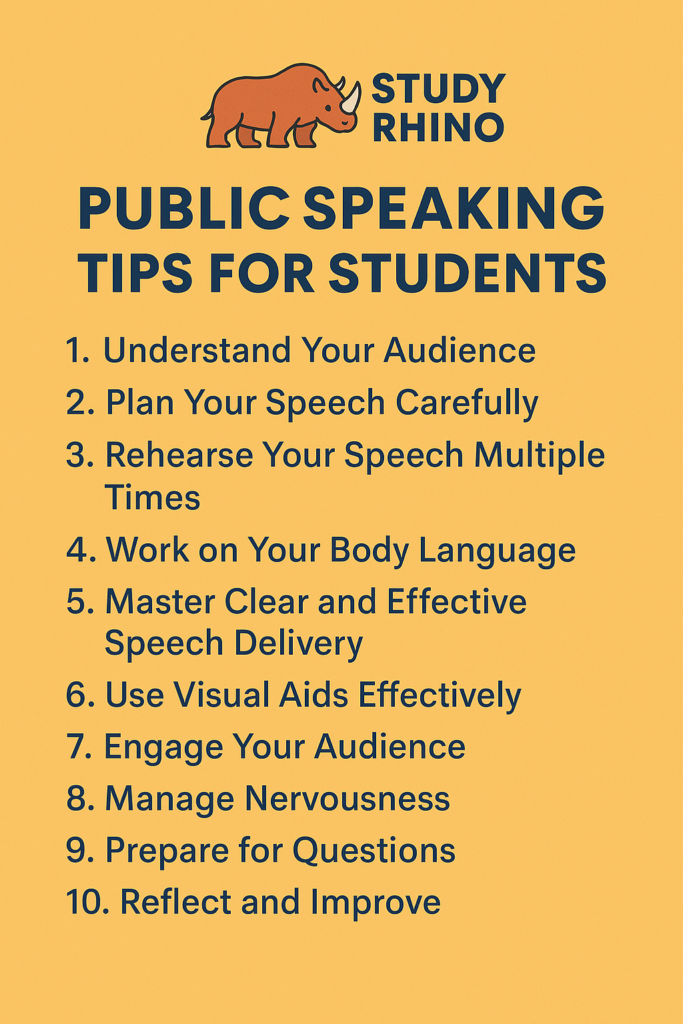

Public speaking is a crucial skill that can significantly influence a student’s academic performance and future professional success. Whether you’re delivering a presentation in class, speaking at an event, or participating in debates, mastering the art of public speaking will help you communicate your ideas clearly, confidently, and persuasively. This article provides valuable public speaking tips for students to enhance their speaking skills and boost their confidence when addressing an audience.
1. Understand Your Audience: Tailor Your Message
Before preparing for any public speaking event, it’s essential to understand your audience. Knowing who will be listening to your speech—whether fellow students, professors, or a more general audience—can help shape how you approach your content, tone, and language. By understanding your audience’s interests and knowledge level, you can tailor your message to make a more significant impact.
2. Plan Your Speech Carefully: Structure is Key
A well-organized speech is essential for clear communication. Follow this simple structure when preparing your speech to ensure clarity and coherence:
Introduction: Start with a compelling hook, such as a surprising fact, a relevant quote, or an interesting anecdote. Briefly introduce your topic and outline the main points you’ll cover.
Body: Break down your main points into digestible sections, supporting each with relevant examples or stories. Focus on the most important points, keeping your content concise and on topic.
Conclusion: Summarize the key takeaways and conclude with a strong, memorable closing statement. A call to action, thought-provoking remark, or summary can leave a lasting impression on your audience.
3. Rehearse Your Speech Multiple Times for Confidence
Rehearsing your speech multiple times is key to improving your performance. Practicing helps you internalize your content, refine your delivery, and enhance your comfort level. The more you practice, the more confident you will feel. You can rehearse in front of a mirror, record yourself, or present to friends or family for constructive feedback.
4. Work on Your Body Language: Non-Verbal Communication Matters
Non-verbal communication plays a vital role in how your message is received. Pay attention to your body language to convey confidence and engage your audience.
Eye Contact: Make sure to maintain eye contact with your audience, as this shows confidence and establishes a connection.
Posture: Stand tall with your shoulders back and feet firmly planted to project authority and confidence.
Gestures: Use natural hand gestures to emphasize key points, but avoid crossing your arms, as it can seem defensive.
Facial Expressions: Ensure that your facial expressions match the tone of your speech, helping to convey emotions effectively.
5. Master Clear and Effective Speech Delivery
Your delivery is just as important as the content of your speech. Here’s how you can deliver your message clearly and effectively:
Pacing: Avoid speaking too quickly or too slowly. Aim for a moderate pace to ensure clarity and keep your audience engaged.
Volume: Ensure that your voice is loud enough to be heard by everyone in the room without shouting.
Clarity: Enunciate your words clearly to avoid any confusion. Speak slowly when necessary, and emphasize key points to help your audience follow along.
Pauses: Use pauses strategically to give your audience time to absorb information and to add emphasis to your key points.
6. Use Visual Aids Effectively: Enhance, Don’t Distract
Visual aids can support your speech and make your message more accessible. However, it’s important to use them sparingly. Visuals should enhance your presentation, not detract from it. Here’s how to use them wisely:
Simplicity: Keep your slides clean and straightforward. Avoid overloading them with text, and instead, focus on images, graphs, or bullet points that complement your speech.
Relevance: Only use visual aids that are directly relevant to your topic. They should serve as a tool to emphasize important points, not as a crutch to lean on.
Don’t Read from Slides: Avoid simply reading from your slides. Use them as a visual cue to expand upon and elaborate on your message.
7. Engage Your Audience: Make Your Speech Interactive
Engaging your audience is crucial for keeping their attention and ensuring that your message resonates. Here are some ways to engage your listeners:
Ask Questions: Pose rhetorical or direct questions to your audience to encourage reflection or participation.
Tell Stories: Use anecdotes or personal stories to make your speech relatable and memorable.
Humor: When appropriate, incorporate humor to lighten the mood and create a connection with your audience. Just ensure it’s relevant and inoffensive.
8. Manage Nervousness: Stay Calm and Focused
Feeling nervous before speaking is normal, but it’s important to manage those nerves effectively. Here are some tips:
Deep Breathing: Slow, deep breaths can help calm your nerves and center your focus before speaking.
Visualization: Picture yourself delivering a successful presentation. Positive visualization can help reduce anxiety and boost your confidence.
Reframe Nervousness: Rather than viewing nervousness as a negative emotion, see it as excitement and energy that can fuel your performance.
9. Prepare for Questions: Handle the Q&A with Confidence
At the end of your speech, you may face questions from your audience. Being prepared for this is essential. Anticipate potential questions and prepare thoughtful responses. If you don’t know the answer, be honest and offer to follow up with more information.
During the Q&A, listen to the questions carefully, take a moment to think, and then respond thoughtfully. This shows that you value the audience’s input and are knowledgeable on your topic.
10. Reflect and Improve: Learn from Each Experience
Public speaking is a skill that improves with experience. After each presentation, take time to reflect on what went well and where you could improve. Consider recording your speeches and reviewing them, as well as seeking feedback from your peers or instructors.
With each public speaking opportunity, you’ll continue to refine your abilities and become more confident and skilled.