

Writing a social studies essay may seem challenging at first, but with the right guidance and strategy, it can become an engaging and fulfilling task. Social studies essays test your ability to analyze historical events, understand social issues, and evaluate different perspectives. The process of writing such an essay requires thorough research, critical thinking, and clear organization of ideas. This comprehensive guide will help you understand how to write an effective social studies essay that demonstrates your analytical skills and mastery of the subject.
1. Understanding the Assignment
Before diving into the writing process, it’s essential to clearly understand what is being asked in the assignment. Social studies essays can vary widely in their requirements. Some assignments may ask you to analyze a specific historical event, while others may ask for your opinion on contemporary social issues or a comparison of political systems.
Key Elements to Understand:
- Topic: What is the essay about? Is it a specific event, idea, or comparison of concepts?
- Instructions: Are there any specific guidelines such as word count, formatting, or required sources?
- Purpose: Are you being asked to argue a point, analyze a situation, or compare multiple perspectives?
Once you have a firm grasp of the topic and the requirements, you can move forward confidently.
2. Researching Your Topic
A strong social studies essay begins with solid research. The more informed you are about the subject matter, the better your arguments and analysis will be. Start by gathering reliable sources, such as books, journal articles, government publications, and reputable websites. For a historical topic, primary sources (documents, speeches, and letters from the period) are invaluable. For contemporary issues, use articles from respected newspapers, academic journals, and expert opinions.
Tips for Research:
- Use a variety of sources: Books, scholarly journals, online databases, and reputable news outlets.
- Evaluate credibility: Ensure that your sources are credible. Stick to peer-reviewed articles and books written by experts in the field.
- Take organized notes: Record key points, quotes, and page numbers to make the writing process easier later.
3. Developing a Thesis Statement
The thesis statement is the central argument or claim of your essay. It should clearly state your position on the topic and guide the direction of your writing. A good thesis is specific, debatable, and focused. It should not be a mere statement of fact, but rather a point that requires evidence and analysis.
Examples of Thesis Statements:
- “The impact of the Industrial Revolution on urbanization led to significant changes in family structures, social hierarchies, and working conditions in 19th-century Europe.”
- “While the United States advocates for democracy globally, its foreign policies often contradict its democratic ideals, especially in Latin America during the Cold War.”
Your thesis will guide the structure of your essay, so it’s crucial to take the time to develop a well-thought-out statement.
4. Creating an Outline
Once you have a solid thesis statement, it’s time to organize your ideas into an outline. An outline serves as a roadmap for your essay, ensuring that your argument flows logically and that all points are addressed.
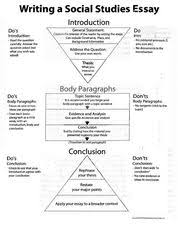
A typical social studies essay structure includes the following components:
- Introduction
- Body paragraphs
- Conclusion
Outline Example:
- Introduction
- Hook: Engage the reader with a compelling statement or question.
- Background: Briefly explain the context of the topic.
- Thesis: State the main argument of the essay.
- Body Paragraphs
- Each body paragraph should address one key point that supports your thesis.
- Paragraph 1: Topic sentence, supporting evidence (facts, quotes, data), analysis.
- Paragraph 2: Topic sentence, supporting evidence, analysis.
- Paragraph 3: Topic sentence, supporting evidence, analysis.
- Conclusion
- Restate the thesis in a new way.
- Summarize key points made in the body.
- Reflect on the broader significance of the topic.
This structure provides clarity to your essay and helps prevent rambling or going off-topic.
5. Writing the Introduction
The introduction is your opportunity to grab the reader’s attention and set the stage for the argument. Start with a hook — a provocative question, a surprising statistic, or a brief anecdote that is related to your topic. Then, provide some background information to set the context and help the reader understand the significance of the issue.
Finally, end the introduction with your thesis statement, clearly outlining the argument or perspective you will present in the essay.
6. Writing the Body Paragraphs
The body of your social studies essay is where you present your evidence and analysis. Each paragraph should focus on a single idea that supports your thesis. A typical body paragraph includes the following elements:
- Topic sentence: This introduces the point or idea of the paragraph.
- Evidence: Use facts, statistics, quotes, and examples from your research to support your point.
- Analysis: After presenting the evidence, explain its significance and how it relates to your thesis.
It’s essential to analyze the evidence critically rather than simply describing it. Show the reader how the facts and information you provide contribute to the overall argument of your essay.
7. Writing the Conclusion
The conclusion is the final opportunity to reinforce your thesis and leave a lasting impression on the reader. Start by restating your thesis in a way that reflects the evidence and analysis you’ve presented. Then, briefly summarize the key points from your body paragraphs, linking them back to your main argument.
Lastly, conclude with a broader reflection on the topic. What are the wider implications of the issue you’ve discussed? How might it influence future developments, or why is it important for the reader to care about this subject?
8. Citing Sources and Avoiding Plagiarism
In any academic writing, including social studies essays, it’s crucial to cite your sources properly to avoid plagiarism. Citations give credit to the original authors of the works you’ve referenced and allow the reader to verify the information you’ve presented.
There are different citation styles (APA, MLA, Chicago), so ensure you follow the one required by your instructor. Your references should include all necessary details such as the author’s name, publication date, title of the work, and where it was published.
Common Citation Styles:
- APA Style: Often used in the social sciences.
- MLA Style: Common in humanities, including history.
- Chicago Style: Often used in history and other social studies fields.
9. Revising and Editing
Once you’ve written the first draft of your social studies essay, the next step is revision. Don’t expect your first draft to be perfect. Instead, focus on refining the structure, improving clarity, and strengthening your arguments. Consider the following when revising:
- Is the thesis clear and specific?
- Are the paragraphs logically organized and focused on a single idea?
- Do the body paragraphs present strong evidence and analysis?
- Does the conclusion effectively summarize the essay’s main points?
After revising the content, carefully proofread your essay for grammar, spelling, punctuation, and formatting errors.
10. Final Checklist
Before submitting your social studies essay, go through the following checklist to ensure you haven’t missed anything:
- Have you answered the question or addressed the topic thoroughly?
- Is your thesis statement clear and supported by evidence?
- Are your sources cited correctly?
- Is your essay well-organized and logically structured?
- Have you proofread for errors?
Conclusion
Writing a social studies essay is an excellent opportunity to demonstrate your understanding of historical events, social issues, and the interconnectedness of human societies. By conducting thorough research, developing a clear thesis, and presenting well-organized arguments, you can craft an essay that not only answers the assignment prompt but also showcases your critical thinking and writing skills.
Remember that writing is a process, so take the time to plan, write, and revise carefully. With these steps in mind, you’ll be well on your way to writing an effective and compelling social studies essay.