
In a world where communication is key, the ability to express thoughts and understand others in various ways is invaluable. While most people focus on spoken and written language, sign language—a rich, visual form of communication—remains underappreciated by many. Learning sign language not only enables communication with the Deaf and hard-of-hearing community, but also offers a wide range of cognitive, cultural, social, and professional benefits.
In this article, we explore the many advantages of learning sign language and why it should be embraced as a valuable skill for students, educators, professionals, and families alike.
What Is Sign Language?
Sign language is a complete and natural language that uses hand shapes, facial expressions, body movement, and gestures to communicate. Different regions have their own sign languages—such as American Sign Language (ASL), British Sign Language (BSL), and Indian Sign Language (ISL)—each with its own grammar and syntax, just like spoken languages.
Sign languages are not universal; they are deeply connected to the culture and community from which they originate. However, the principles of visual communication remain consistent across different sign languages.
- Enhanced Communication Skills
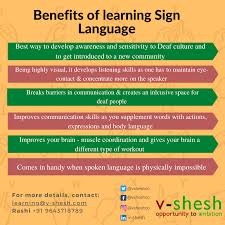
Learning sign language expands your overall communication abilities. For students, especially those in inclusive schools or colleges, being able to sign bridges the gap between hearing and non-hearing peers. It fosters inclusivity and empathy while also helping students express themselves in new ways.
For younger children, signing before they develop verbal skills can improve early communication, reduce frustration, and even accelerate language development. Studies have shown that babies who learn basic signs often speak earlier and have larger vocabularies.
- Cognitive and Academic Benefits
Sign language learning has a positive impact on the brain, regardless of age. It activates different parts of the brain involved in memory, spatial reasoning, and language processing. Some cognitive advantages include:
- Improved memory and recall: Sign language engages visual and kinesthetic memory, making it easier to remember concepts.
- Stronger problem-solving skills: Understanding a visual language improves abstract thinking and multitasking.
- Better spelling and reading: Signers often have a more intuitive grasp of spelling patterns, especially when learning through fingerspelling.
Incorporating sign language in classrooms can support visual learners and promote multilingual development, particularly when taught alongside spoken and written languages.
- Career Opportunities and Professional Development
Knowing sign language opens the door to various career paths, particularly in education, healthcare, social work, customer service, and interpretation. Professions where sign language is highly valuable include:
- Sign language interpreters
- Speech and language therapists
- Special education teachers
- Audiologists
- Customer support agents
- Emergency responders
As society becomes more inclusive, many employers see sign language as a desirable or even essential skill. Having it on your résumé demonstrates communication versatility and cultural competence.
- Promoting Inclusion and Accessibility
By learning sign language, individuals contribute directly to making the world a more inclusive place. The Deaf and hard-of-hearing community often face communication barriers in schools, workplaces, and public spaces. When more people understand sign language, these barriers decrease.
Students and professionals who can sign help ensure that others feel seen, heard, and respected. It fosters an environment where everyone can participate equally, be it in the classroom, office, or social settings.
- Deeper Cultural Awareness
Sign language is deeply tied to Deaf culture, which has its own history, values, art, and social norms. Learning the language provides insight into this vibrant culture and helps dismantle stereotypes.
Deaf culture emphasizes visual communication, storytelling, and a strong sense of community. Engaging with it through sign language promotes respect, understanding, and appreciation for diversity. It also teaches the importance of accessibility in design, education, and communication.
- Nonverbal Communication Mastery
Sign language is a powerful tool in understanding and mastering nonverbal communication. Users become more aware of body language, facial expressions, and eye contact, all of which are crucial in everyday interactions.
This heightened sensitivity improves interpersonal skills, especially in fields like counseling, teaching, acting, or sales. Even in situations where spoken communication is not possible—such as noisy environments or when maintaining silence—sign language comes in handy.
- Support for Family Members and Friends
For families with Deaf or hard-of-hearing members, learning sign language can be life-changing. It strengthens relationships and creates an environment where everyone can communicate openly. Parents who learn sign language with their children—Deaf or hearing—also develop stronger emotional bonds.
It’s also a helpful tool for people with speech delays, autism, Down syndrome, or other communication challenges. Sign language empowers individuals who struggle with verbal expression to share their thoughts and feelings effectively.
- A Lifelong Learning Skill
Much like learning a spoken second language, sign language enhances mental flexibility and keeps the brain active. Lifelong learners often turn to sign language to stay mentally engaged and explore new cultures.
Sign language classes are increasingly offered online and in community centers, making them accessible to learners of all ages. Whether for personal growth, academic credit, or professional development, sign language is a skill that continues to give.
- Better Behavior and Emotional Development in Children
In early childhood education, incorporating sign language can lead to better emotional regulation and behavior. Children who can express basic needs such as “hungry,” “tired,” or “help” using signs are less likely to become frustrated or act out.
This early empowerment fosters a sense of independence and boosts confidence. It also helps teachers and caregivers respond more effectively to a child’s needs, leading to a more harmonious learning environment.
- Creativity and Expressiveness
Sign language encourages creative expression. From signed poetry to Deaf theater, the language offers unique ways to tell stories, perform, and share experiences. Because it relies heavily on visual and physical expression, it can also enhance public speaking, acting, and performance skills.
Sign language learners often report increased confidence in expressing themselves creatively. They also develop a better appreciation for the power of gesture, rhythm, and movement in communication.
- Emergency Communication Tool
In emergency situations where verbal communication is impossible—due to noise, injury, or safety concerns—sign language can be a lifesaver. First responders, doctors, and emergency personnel who know sign language can provide faster and more effective assistance to non-verbal patients.
Even basic knowledge of signs like “help,” “pain,” or “stop” can make a difference in crisis scenarios. Some hospitals and fire departments now include sign language basics in their training.
- Global Applications and Travel Benefits
Though sign languages differ by country, travelers can still benefit from learning signs. Many signs are iconic or visually descriptive, making them easy to pick up across cultures. Tourists who use sign language often find it easier to communicate across language barriers when both parties resort to gestures.
Additionally, international sign—a simplified version of sign language used in global Deaf events—offers a means of cross-cultural communication, especially at gatherings like the Deaflympics or World Federation of the Deaf congresses.
Getting Started: How to Learn Sign Language
Learning sign language is easier than ever thanks to digital tools and community resources. Here are a few suggestions to get started:
- Enroll in a class: Look for ASL, BSL, or ISL classes at local colleges, libraries, or online platforms.
- Use apps and websites: Apps like SignSchool, The ASL App, or Lingvano offer free and premium lessons.
- Watch videos: YouTube channels run by Deaf creators provide authentic language models.
- Join a community: Connect with Deaf individuals, attend events, and practice conversational signing.
- Practice regularly: Like any language, consistency is key to mastering sign language.
Final Thoughts
Learning sign language is more than just acquiring a new way to communicate—it’s a step toward creating a more inclusive, empathetic, and connected society. Whether you’re a student, teacher, parent, or professional, the benefits of learning sign language are far-reaching and lifelong.
At Study Rhino, we encourage our learners to explore diverse languages and cultures. Sign language isn’t just for those who “need” it—it’s for everyone who values communication, connection, and community.
So why wait? Start signing today and open your hands—and heart—to a whole new world.