
The Socratic Method, named after the ancient Greek philosopher Socrates, is a distinctive form of teaching and intellectual inquiry that encourages deep thinking, critical analysis, and dialogue. This method, which has had a profound impact on education and philosophy, remains a valuable tool for fostering critical thinking and stimulating conversation in the modern classroom. In this article, we will explore the origins, principles, and applications of the Socratic Method, its significance in education, and how it continues to shape learning environments today.
Origins of the Socratic Method
The Socratic Method finds its roots in the teachings and practices of Socrates, who lived from 470-399 BCE in ancient Athens. Socrates, unlike many philosophers of his time, did not write down his teachings. Instead, he engaged in conversations with a variety of people, from common citizens to prominent politicians, to explore fundamental questions about life, ethics, justice, and knowledge. His approach was not to impart knowledge directly but to engage others in a process of self-discovery through questioning.
Socrates was concerned with the nature of virtue, morality, and human understanding. He believed that individuals could arrive at truth and wisdom through reasoning and dialogue, rather than relying on established dogma or authority. His method of questioning, often called “elenchus,” was designed to challenge assumptions, clarify concepts, and stimulate deeper reflection. The Socratic Method is grounded in the belief that through rigorous questioning and discussion, individuals can reach a more profound understanding of complex ideas and issues.
Principles of the Socratic Method
The Socratic Method is based on several key principles that make it distinct from traditional forms of teaching. These principles emphasize critical thinking, self-reflection, and dialogue:
- Questioning and Dialogue: At the heart of the Socratic Method is the use of questioning as a tool for exploration. Instead of providing answers, the teacher or facilitator asks open-ended questions that encourage students to think critically and engage with ideas. These questions are designed to probe underlying assumptions, challenge preconceived notions, and promote deeper understanding.
- Critical Thinking: The Socratic Method emphasizes the development of critical thinking skills. It encourages individuals to question their beliefs and assumptions, analyze arguments, and evaluate evidence. Through this process, students learn to think independently, rather than accepting information at face value.
- Self-Examination: Socrates famously said, “The unexamined life is not worth living.” The Socratic Method encourages individuals to engage in self-examination and reflection. By questioning their own beliefs and assumptions, individuals can arrive at a clearer understanding of their values, principles, and reasoning.
- Dialectic Process: The Socratic Method involves a dialectic process, where two or more individuals engage in a conversation, exchanging ideas and challenging each other’s views. This process of dialogue is not aimed at winning an argument but at reaching a deeper understanding of the truth. Through this back-and-forth exchange, participants refine their ideas and uncover new insights.
- Active Participation: In the Socratic Method, students are not passive recipients of information; they are active participants in the learning process. By engaging in dialogue and questioning, students take ownership of their learning and develop a more profound understanding of the subject matter.
The Socratic Method in Practice
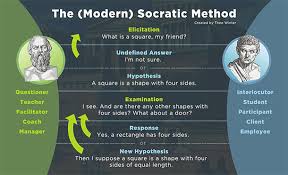
The Socratic Method can be applied in a variety of educational contexts, from formal classrooms to informal discussions. In practice, the method involves several key steps:
- Pose a Question: The facilitator or teacher begins by posing a thought-provoking question related to the topic at hand. This question is usually open-ended and designed to prompt critical thinking. For example, in a philosophy class, a teacher might ask, “What is justice?” or “Is it ever right to lie?”
- Encourage Exploration: The teacher encourages students to respond to the question and express their views. However, the goal is not to provide a final answer but to engage in a process of exploration. The teacher asks follow-up questions to probe deeper into students’ reasoning and to uncover the assumptions behind their answers.
- Challenge Assumptions: As the conversation unfolds, the teacher challenges students’ assumptions and beliefs. For example, if a student argues that justice is simply giving people what they deserve, the teacher might ask, “But what happens when people deserve different things?” or “How do we determine what someone deserves?” These questions encourage students to think critically about their answers and to consider alternative perspectives.
- Refine Ideas: As the dialogue progresses, students refine their ideas and arguments. Through questioning and discussion, they develop a deeper understanding of the topic and may arrive at new insights or conclusions.
- Reach a Conclusion (or Not): The Socratic Method does not necessarily aim to reach a final answer or conclusion. Instead, the goal is to engage in a process of intellectual inquiry that leads to greater understanding. In some cases, the discussion may end without a definitive answer, but the participants are left with a deeper appreciation of the complexity of the issue.
Applications of the Socratic Method
The Socratic Method has applications across various disciplines and educational levels. Some common areas where the method is used include:
1. Philosophy and Ethics
The Socratic Method is perhaps most closely associated with philosophy, particularly in the exploration of ethical questions. In philosophy classrooms, students engage in dialogue to explore fundamental questions about morality, justice, truth, and the nature of knowledge. For example, a teacher might use the Socratic Method to discuss the ethical implications of a current event or to explore classical ethical theories such as utilitarianism or deontology.
2. Law and Legal Education
The Socratic Method is widely used in law schools to teach students how to think like lawyers. Legal educators use the method to engage students in case analysis, encouraging them to critically examine legal principles, precedents, and the arguments made by different parties. By questioning students about the reasoning behind legal rulings, the teacher helps students develop their legal reasoning and analytical skills.
3. Literature and Humanities
In literature and humanities classes, the Socratic Method can be used to analyze texts and explore themes, characters, and philosophical ideas. By questioning students about the motivations of characters or the meaning of certain passages, teachers encourage a deeper engagement with the text and stimulate discussion about the broader implications of the work.
4. Science and Critical Thinking
While the Socratic Method is traditionally associated with the humanities, it can also be used in the sciences to promote critical thinking. In science classrooms, teachers can use the Socratic Method to challenge students’ understanding of scientific concepts, ask about the evidence behind theories, and explore the implications of scientific discoveries.
5. Mathematics
In mathematics, the Socratic Method is often used to guide students through the problem-solving process. Rather than simply providing solutions, teachers ask students to explain their reasoning, identify patterns, and explore alternative approaches to solving problems. This helps students develop a deeper understanding of mathematical concepts and fosters a more active approach to learning.
Benefits of the Socratic Method
The Socratic Method offers numerous benefits, both for students and teachers. Some of the key advantages include:
- Development of Critical Thinking Skills: By encouraging students to question assumptions and analyze their reasoning, the Socratic Method helps develop critical thinking skills that are valuable in all areas of life.
- Active Learning: The Socratic Method shifts the focus from passive learning to active participation. Students become engaged in the learning process and take ownership of their understanding.
- Improved Communication Skills: The method fosters open dialogue and encourages students to articulate their ideas clearly and persuasively. Through questioning and discussion, students also learn to listen actively and engage with the ideas of others.
- Enhanced Understanding of Complex Concepts: By encouraging students to explore ideas deeply and from multiple perspectives, the Socratic Method leads to a more nuanced understanding of complex topics.
- Fostering Intellectual Curiosity: The Socratic Method promotes intellectual curiosity and a love of learning. By encouraging students to ask questions and explore ideas, it fosters a mindset of lifelong learning.
Challenges and Criticisms of the Socratic Method
While the Socratic Method has many benefits, it is not without its challenges and criticisms. Some of the common criticisms include:
- Time-Consuming: The Socratic Method can be time-consuming, as it involves deep, thoughtful dialogue. In fast-paced educational settings, it may be difficult to devote sufficient time to each question and discussion.
- Unequal Participation: In some cases, certain students may dominate the discussion, while others remain silent. This can limit the effectiveness of the method and prevent all students from fully engaging in the learning process.
- Frustration: The questioning process can sometimes lead to frustration, particularly for students who are not used to thinking critically or engaging in complex dialogue. Some students may feel uncomfortable or intimidated by the intensity of the questioning.
- Not Always Conducive to All Learning Styles: While the Socratic Method is highly effective for some students, it may not be the best approach for all learning styles. Some students may prefer more structured, direct instruction or hands-on learning experiences.
Conclusion
The Socratic Method is a powerful tool for encouraging critical thinking, dialogue, and intellectual exploration. By focusing on questioning and dialogue, this method fosters deeper understanding and encourages students to take an active role in their learning. While it may present challenges, the Socratic Method remains a valuable approach in education, helping students develop the skills they need to think critically, communicate effectively, and engage with complex ideas. Whether in philosophy, law, science, or the humanities, the Socratic Method continues to play a vital role in shaping education and intellectual inquiry across disciplines.