English is one of the most widely spoken and influential languages in the world today. With over 1.5 billion people speaking it globally, it serves as a bridge across cultures, continents, and disciplines. But have you ever wondered where English comes from? The journey of the English language is a fascinating story of invasions, evolution, and influence. From ancient tribes in Europe to global empires, English has absorbed elements from many other tongues. In this article, we’ll explore the rich and complex origins of the English language.
- The Indo-European Roots
To truly understand English, we need to start with its ancient ancestry. English belongs to the Indo-European language family, a group of related languages spoken from India to Europe. Linguists believe this language family originated around 4500 to 2500 BCE in the Pontic-Caspian Steppe, in present-day Ukraine and southern Russia.
From this origin point, the Indo-European language family spread across Europe and Asia, evolving into several branches. English is part of the Germanic branch, alongside languages like German, Dutch, and the Scandinavian languages (Danish, Swedish, Norwegian, etc.).
- The Germanic Beginnings
Around 500 BCE, Germanic tribes began forming a distinct linguistic identity. These tribes, including the Angles, Saxons, and Jutes, lived in what is now Denmark and northern Germany.
By the 5th century CE, these tribes began migrating to the British Isles, displacing the native Celtic-speaking populations. They brought with them a version of the Germanic language that would evolve into what we now call Old English.
- Old English (450–1150)
The period from about 450 to 1150 is known as the Old English period. The language spoken during this time would be nearly unrecognizable to a modern English speaker. Here’s an example:
- Old English: Hwæt! Wē Gār-Dena in geārdagum… (from Beowulf)
- Modern English: Lo! We of the Spear-Danes in days of yore…
Old English was a highly inflected language, meaning word endings changed to show grammatical relationships. It had a strong Germanic vocabulary but also retained influences from earlier Celtic and Latin (brought by the Romans, who ruled Britain from 43 to 410 CE).
Some common Old English words still in use today include:
- House (hūs)
- Mother (mōdor)
- Friend (frēond)
- Viking Invasions and Norse Influence
Between the 8th and 11th centuries, the British Isles faced repeated invasions from Norse Vikings who spoke Old Norse, a North Germanic language.
The Vikings didn’t just raid; many settled and mingled with the locals. This led to significant language contact. English absorbed hundreds of Norse words, especially in the north and east of England.
Examples of Norse contributions:
- Sky
- Egg
- Knife
- They, their, them (these replaced Old English words)
Interestingly, many place names in England like Grimsby or Derby are of Norse origin.
- The Norman Conquest and Middle English (1150–1500)
A major turning point came in 1066, when William the Conqueror, Duke of Normandy (in present-day France), invaded England and became king. This brought about enormous changes.
The Normans spoke a dialect of Old French, and for several centuries, French became the language of the ruling class, law, government, and education in England. English continued to be spoken by the common people, but it started to absorb a huge amount of French vocabulary.
Examples of French-origin words:
- Court
- Justice
- Government
- Beauty
- Cuisine
This period is known as Middle English, and during this time, English grammar began to simplify. Many of the complex word endings of Old English disappeared. By the end of the Middle English period, English had evolved into a much more familiar form.
A well-known work from this time is Geoffrey Chaucer’s The Canterbury Tales. Here’s an excerpt:
- Whan that Aprill with his shoures soote…
Though still challenging, Middle English is much more accessible than Old English.
- Early Modern English (1500–1700)
The period from 1500 to 1700 is known as Early Modern English, and it saw massive changes in vocabulary, pronunciation, and spelling.
One of the most influential events was the Great Vowel Shift, a series of changes in how vowels were pronounced. For example, the word “bite” used to be pronounced like “beet,” and “meet” was pronounced like “mate.”
This era also saw the rise of the printing press, introduced to England by William Caxton in 1476. Printing helped standardize spelling and grammar, although many inconsistencies remain to this day (like cough, though, and through).
During this time, English borrowed extensively from Latin and Greek, especially in the fields of science, medicine, and philosophy.
Notable writers include:
- William Shakespeare, whose influence on the English language is unmatched. He coined or popularized many phrases still in use today, like:
- “Break the ice”
- “In a pickle”
- “Wild-goose chase”
- Modern English (1700–Present)
By the 18th century, English had become much more recognizable to modern speakers. This is known as Modern English.
Key developments in this period include:
- Samuel Johnson’s Dictionary (1755): One of the first major dictionaries that helped standardize spelling and definitions.
- Expansion of the British Empire: As Britain colonized parts of Africa, Asia, the Americas, and the Caribbean, English became a global language. It absorbed words from many other languages, such as:
- Bungalow (from Hindi)
- Safari (from Swahili)
- Canoe (from Carib)
- Tobacco (from Arawakan)
In the 20th century, English was further spread by:
- The rise of the United States as a global power
- Mass media: television, movies, and the internet
- Scientific and technological advancement, where English became the primary language of international research
- Varieties of English
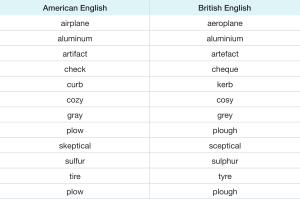
Today, English is not a single language but a collection of dialects and varieties. While British English and American English are the most prominent, there are many more forms, including:
- Canadian English
- Australian English
- Indian English
- Nigerian English
- Singlish (Singapore English)
Each has its own accent, vocabulary, and idioms, shaped by local culture and history. Yet, all these varieties remain mutually intelligible to a great extent.
- The Vocabulary of English
One of the most remarkable things about English is its vast and varied vocabulary. It has absorbed words from Latin, French, Norse, Dutch, Arabic, Persian, Hindi, and countless other languages.
This rich vocabulary allows for great nuance and precision. For example, English often has synonyms with different connotations:
- Ask (Old English origin)
- Inquire (French origin)
- Interrogate (Latin origin)
Each has a slightly different tone and usage.
- Conclusion: A Living, Changing Language
English is not a frozen or static language. It continues to evolve. New words are created every year, often influenced by technology (selfie, hashtag), pop culture (stan, ship), and social movements (woke, cancel culture).
The story of English is a tale of migration, conquest, innovation, and adaptability. It has survived invasions, plagues, revolutions, and now, the digital age.
At its core, the English language reflects the history of the world—a mix of peoples, stories, and ideas. Whether you’re writing an essay, speaking with friends, or scrolling through memes, you’re participating in a 1,500-year-old conversation that’s still going strong.