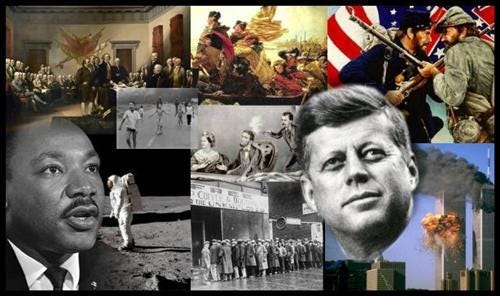

The 20th century was one of the most transformative eras in human history. Spanning from 1901 to 2000, it witnessed groundbreaking innovations, political upheavals, cultural revolutions, and tragic wars. It was a century that shaped the modern world and influenced every aspect of life — from science and technology to politics and culture.
In this article, we will explore some of the major events of the 20th century, organized by themes and decades to help students better understand the impact and chronology of global developments.
- The World at War: Two Global Conflicts
World War I (1914–1918)
Often referred to as “The Great War,” World War I began after the assassination of Archduke Franz Ferdinand of Austria. It involved many of the world’s great powers divided into two main alliances: the Allies and the Central Powers. The war caused unprecedented destruction, with millions of soldiers and civilians losing their lives. It introduced trench warfare, tanks, and chemical weapons.
Significance:
- Collapse of empires (Ottoman, Austro-Hungarian, German, and Russian)
- Treaty of Versailles (1919), which imposed heavy penalties on Germany
- Creation of the League of Nations, a precursor to the United Nations
World War II (1939–1945)
World War II was a result of unresolved issues from WWI, economic turmoil, and the rise of totalitarian regimes. Adolf Hitler’s Nazi Germany invaded Poland in 1939, prompting Britain and France to declare war. The war expanded across Europe, Asia, Africa, and the Pacific.
Key events include:
- The Holocaust (genocide of 6 million Jews)
- Attack on Pearl Harbor (1941), bringing the US into the war
- D-Day Invasion (1944)
- Atomic bombings of Hiroshima and Nagasaki (1945)
Outcomes:
- Founding of the United Nations (1945)
- Emergence of the US and USSR as superpowers
- Division of Germany and the beginning of the Cold War
- Political Transformations and Decolonization
The Russian Revolution (1917)
The Bolsheviks, led by Vladimir Lenin, overthrew the Russian monarchy and established a communist state, which later became the Soviet Union. This revolution inspired other communist movements and set the stage for the Cold War.
End of Colonial Empires (1940s–1970s)
After World War II, many countries in Asia and Africa fought for and gained independence from European colonial powers.
Notable cases:
- India gained independence from Britain in 1947 under the leadership of Mahatma Gandhi.
- African countries like Ghana (1957), Nigeria (1960), and Kenya (1963) also broke free from colonial rule.
Fall of the Berlin Wall (1989)
The Berlin Wall, a symbol of the Cold War, was torn down in 1989. This event marked the collapse of communist regimes in Eastern Europe and paved the way for the reunification of Germany.
- The Cold War Era (1947–1991)
After World War II, the world was divided into two ideological camps:
- Capitalist West, led by the United States
- Communist East, led by the Soviet Union
Though there was no direct war between the two superpowers, the Cold War involved:
- Arms race and nuclear stockpiling
- Space Race – USSR launched Sputnik (1957), and the US landed on the moon (1969)
- Proxy wars – Korean War (1950–1953), Vietnam War (1955–1975), and Afghan War (1979–1989)
- Cuban Missile Crisis (1962) – A near-nuclear conflict
The Cold War ended with the dissolution of the Soviet Union in 1991, leaving the United States as the sole superpower.
- Scientific and Technological Revolutions
The Space Age
- Sputnik 1 (1957): The first artificial satellite launched by the USSR.
- Apollo 11 (1969): The US sent Neil Armstrong and Buzz Aldrin to the moon. “That’s one small step for man, one giant leap for mankind.”
Invention of Computers and the Internet
- Early computers like ENIAC (1945) were massive, but led to today’s digital age.
- The Internet began as ARPANET (1969) and evolved into a global system connecting billions of users by the late 1990s.
Medical Breakthroughs
- Discovery of penicillin (1928) by Alexander Fleming revolutionized medicine.
- Polio vaccine by Jonas Salk (1950s)
- Advancements in surgery, organ transplants, and genetic research transformed healthcare.
- Civil Rights and Social Movements
Women’s Suffrage
- Women won the right to vote in many countries during the early 20th century. For example, the US passed the 19th Amendment in 1920.
The American Civil Rights Movement (1950s–1960s)
Led by figures like Martin Luther King Jr., the movement aimed to end racial segregation and promote equality for African Americans.
Key moments:
- Brown v. Board of Education (1954): Ended school segregation
- Civil Rights Act of 1964: Banned discrimination in public places and employment
- Voting Rights Act of 1965
Anti-Apartheid Movement in South Africa
Nelson Mandela became a global symbol of resistance against racial oppression. Apartheid officially ended in the early 1990s, and Mandela became South Africa’s first Black president in 1994.
- Economic Events and Globalization
The Great Depression (1929–1939)
A global economic crisis triggered by the US stock market crash in 1929. It led to massive unemployment, poverty, and political instability around the world.
Post-War Economic Boom (1950s–1970s)
After WWII, many Western countries experienced rapid economic growth, increased consumerism, and technological progress.
Globalization
In the late 20th century, advancements in transport and communication shrank the world. Trade, culture, and ideas spread rapidly.
- Creation of the World Trade Organization (1995)
- Expansion of multinational corporations
- Outsourcing and global supply chains
- Culture, Art, and Media
The Rise of Pop Culture
- Movies: Hollywood’s golden age, Disney classics, and blockbuster films
- Music: From jazz and rock ‘n’ roll to hip-hop and pop
- TV: Became a household staple by the 1950s
- Literature: Influential works like George Orwell’s 1984 and J.R.R. Tolkien’s The Lord of the Rings
The Information Revolution
- The personal computer (1980s)
- World Wide Web (1990s): Revolutionized access to information, education, and communication
- Tragedies and Disasters
The Holocaust (1941–1945)
One of history’s darkest chapters. Nazi Germany systematically murdered 6 million Jews and millions of others, including Romani people, disabled individuals, and political opponents.
Atomic Bombings of Hiroshima and Nagasaki (1945)
The only use of nuclear weapons in war to date. Over 200,000 people died, and the event highlighted the devastating power of atomic energy.
Chernobyl Nuclear Disaster (1986)
A reactor explosion in the Soviet Union (now Ukraine) released radioactive material, causing long-term health and environmental effects.
Natural Disasters
- 1970 Bhola cyclone in East Pakistan (now Bangladesh): Over 300,000 dead
- 1985 Mexico City earthquake: Thousands killed and widespread destruction
- Key Figures of the 20th Century
- Albert Einstein: Revolutionized physics with his theory of relativity
- Winston Churchill: British Prime Minister during WWII
- Franklin D. Roosevelt: Led the US during the Great Depression and WWII
- Mahatma Gandhi: Leader of India’s nonviolent independence movement
- Martin Luther King Jr.: Voice of civil rights in the US
- Nelson Mandela: Ended apartheid in South Africa
- Mother Teresa: Known for humanitarian work with the poor in India
Conclusion: A Century That Changed the World
The 20th century was a rollercoaster of human achievement and tragedy. It taught us about the horrors of war, the power of unity, the speed of scientific progress, and the ongoing fight for justice and equality. As students, understanding these events is not just about memorizing dates — it’s about learning from the past to build a better, fairer future.
Stay curious, stay informed, and keep exploring history — only on Study Rhino.