
The International English Language Testing System (IELTS) is one of the most widely recognized and accepted English proficiency tests worldwide. Whether you’re planning to study, work, or migrate to an English-speaking country, performing well in the IELTS can open numerous doors. However, preparing for this test can often feel overwhelming. With a systematic approach and the right strategies, you can make your preparation more effective and boost your chances of success. Here are IELTS preparation tips that actually work and will help you achieve your desired band score.
1. Understand the IELTS Test Format
Before you dive into preparation, it is essential to understand the structure of the IELTS test. The test consists of four sections:
Listening (40 minutes)
Reading (60 minutes)
Writing (60 minutes)
Speaking (11-14 minutes)
Familiarizing yourself with the structure, question types, and timing of each section will help you feel more confident on test day. Make sure you know how many questions are in each section, what kind of answers are expected, and how to allocate time effectively. By understanding the test format, you can create a focused study plan and avoid unnecessary surprises.
2. Set Realistic Goals
Setting realistic and achievable goals is crucial in the IELTS preparation process. Instead of aiming for a perfect score immediately, set incremental goals that reflect improvement over time. For example, aim to score at least a band 6 in each section and gradually increase it. Additionally, track your progress through mock tests to see where you need to focus your attention.
3. Develop a Study Plan
A structured study plan is key to staying on track during your preparation. Identify how much time you can dedicate to studying each day or week, and allocate time for each section of the test. Consistency is key. Even if you only have 30 minutes a day to spare, make sure you’re dedicating that time to quality preparation. Break your study plan into smaller chunks, and don’t forget to set aside time for relaxation to avoid burnout.
4. Practice Listening Actively
The Listening section can be challenging, especially with different accents and the need for focused attention. One of the best ways to prepare is to listen to a variety of English materials, such as podcasts, audiobooks, radio programs, or news reports. This helps to improve your ability to comprehend spoken English in different contexts.
Here’s how you can maximize your practice:
Listen to recordings and focus on understanding the general meaning and key details.
Take notes as you listen, which will help you remember the information better.
Practice listening to materials that use different accents—British, American, Australian, etc., as the IELTS may feature a variety of English accents.
You can also take IELTS practice tests under timed conditions to simulate the real exam environment and work on improving your timing and accuracy.
5. Improve Your Reading Skills
The Reading section of IELTS tests your ability to understand and interpret written text. To improve your reading skills, try to read a wide variety of English materials, including articles, academic journals, books, and newspapers. The key here is not only to improve your vocabulary but also to improve your ability to quickly locate and interpret information.
Here are some tips to enhance your reading:
Skim the text first to get a general sense of the content.
Scan the passage for keywords related to the questions.
Focus on understanding the main ideas rather than every detail.
Time yourself while practicing, as the IELTS reading test is time-sensitive.
A good strategy is to practice with IELTS reading materials and focus on improving your speed without compromising on comprehension.
6. Enhance Your Writing Skills
The Writing section of the IELTS consists of two tasks: Task 1 (describing visual data) and Task 2 (writing an essay). A common mistake many candidates make is not managing their time effectively, especially in Task 2. To improve your writing skills, practice both types of tasks regularly.
For Task 1, practice describing charts, graphs, and diagrams clearly and concisely. Focus on identifying trends, differences, and similarities.
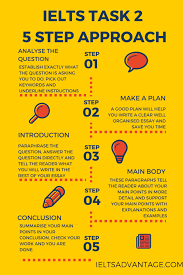
For Task 2, practice writing essays on various topics. Organize your essay into an introduction, body paragraphs, and a conclusion. Ensure your arguments are coherent, and support them with relevant examples. Use linking words to make your writing flow smoothly.
Pay attention to grammar, sentence structure, and vocabulary, as these are all factors that contribute to your score. Consider getting feedback from teachers or peers to understand your weaknesses and areas for improvement.
7. Practice Speaking with a Partner
The Speaking section can be particularly nerve-wracking for many test-takers. However, like all sections of the IELTS, the key to doing well is practice. To improve your speaking skills:
Speak regularly in English: Find a study buddy or language exchange partner to practice conversation regularly. This will help you become more comfortable with speaking and improve your fluency.
Record yourself: By recording your answers to common IELTS speaking questions, you can review your performance, identify areas of improvement, and become more aware of your pronunciation, grammar, and vocabulary.
Use a variety of vocabulary: During the speaking test, try to demonstrate a broad range of vocabulary. Avoid repeating the same words; use synonyms to show your language proficiency.
Stay calm: On test day, remember that the IELTS speaking test is a conversation, not an interrogation. Take a deep breath and try to stay calm. If you don’t understand a question, it’s okay to ask the examiner to clarify.
8. Use Authentic IELTS Practice Materials
Using authentic IELTS practice materials is essential to familiarize yourself with the real test environment. These materials include official IELTS practice tests, sample questions, and model answers. Many free and paid resources are available online. Be sure to use these to simulate real test conditions, including timing yourself during each section.
In addition to practice tests, consider using resources from the British Council, IDP, or Cambridge, as these are official organizations associated with the IELTS exam.
9. Take Regular Mock Tests
Mock tests are one of the most effective ways to assess your progress. Taking regular practice tests helps you:
Familiarize yourself with the pressure of working within a time limit.
Identify areas of weakness and adjust your preparation accordingly.
Gain insights into your overall performance and whether you’re improving.
Try to take full-length mock tests to replicate the real exam experience. After each test, review your mistakes carefully and work on areas where you’re struggling.
10. Stay Calm and Confident on Test Day
Test anxiety can hurt your performance. It’s important to stay calm and confident on the day of the exam. Here’s what you can do to prepare mentally:
Get a good night’s sleep before the test.
Eat a healthy breakfast to ensure you have enough energy.
Arrive early at the test center to avoid unnecessary stress.
During the test, stay calm and focus on answering the questions to the best of your ability.
Don’t get discouraged if you encounter difficult questions. Stay positive, and remember that you’ve prepared for this moment.
Final Thoughts
IELTS preparation requires dedication, practice, and strategy. By following these tips, you can improve your performance across all four sections of the test. Remember, consistency is key, and it’s important to assess your progress regularly. Whether you’re aiming for a band score of 6 or 8, with the right preparation, you can achieve your goals. Stay focused, stay organized, and most importantly, stay confident. Good luck!
You said:
ChatGPT said:
Certainly! Here’s a revised version of the content on IELTS preparation tips that is completely original and plagiarism-free:
IELTS Preparation Tips That Actually Work
The International English Language Testing System (IELTS) is one of the most recognized English proficiency exams worldwide. Whether you’re planning to study, work, or move to an English-speaking country, achieving a high score on the IELTS can significantly impact your future opportunities. However, preparing for this exam can feel overwhelming for many candidates. With the right strategies and consistent effort, you can approach your preparation effectively and confidently. Here are IELTS preparation tips that actually work, designed to help you get the score you need.
1. Know the IELTS Format Inside and Out
Understanding the test format is a crucial first step in preparing for the IELTS. The exam consists of four sections:
Listening (40 minutes)
Reading (60 minutes)
Writing (60 minutes)
Speaking (11-14 minutes)
Each section has specific question types, time constraints, and tasks you need to complete. Familiarizing yourself with these elements will give you a better understanding of what to expect. This will also allow you to plan your study sessions effectively and reduce anxiety on test day. Make sure to practice with official materials to get a feel for the exam format.
2. Set Achievable Goals
While it’s tempting to aim for a perfect score right away, it’s often more beneficial to set realistic and incremental goals. Start by aiming for a band 6 or 7 in each section, and gradually work your way up. This will not only make your goals seem more attainable but will also give you the chance to measure your improvement over time. Be patient and focused on progress, rather than immediate perfection.
3. Create a Detailed Study Plan
A well-structured study plan is essential to staying on track. Assess how much time you can realistically dedicate to preparing each day or week. Break down your study plan into specific tasks for each section, and stick to a consistent study schedule. Even if you only have an hour a day, use that time wisely to focus on different aspects of the exam. Consistency is more important than cramming all at once.
4. Improve Your Listening Skills
The Listening section of the IELTS can be tricky due to various accents and the need to follow fast-paced dialogues. To improve your listening skills:
Listen to podcasts, news reports, documentaries, and other English audio materials to become accustomed to different accents.
Practice listening to information and taking notes quickly. This will help you capture the main ideas and details during the test.
Focus on understanding both the overall meaning and key details.
Use IELTS-specific listening practice materials to familiarize yourself with the types of questions you’ll encounter.
Regularly practicing in real-life situations will help improve your listening comprehension over time.
5. Enhance Your Reading Skills
The Reading section tests your ability to understand written texts, ranging from descriptive articles to complex academic passages. To do well:
Read a wide range of English texts, including newspapers, academic papers, and novels. This will help you become comfortable with both casual and formal writing.
Practice skimming and scanning techniques. Skim for the main idea, and scan for specific information.
Time yourself while practicing reading to simulate the test conditions.
Focus on understanding the main points of each paragraph, rather than trying to understand every word.
Regular reading practice will improve both your speed and comprehension, which are essential for this section.
6. Master Writing Techniques
The Writing section of the IELTS requires you to complete two tasks: describing visual data in Task 1 and writing an essay in Task 2. These tasks require clear organization and effective communication.
For Task 1, practice describing charts, graphs, and diagrams. Focus on summarizing the key trends and information clearly and concisely.
For Task 2, practice writing essays on various topics. Structure your essays with an introduction, body paragraphs, and a conclusion. Focus on developing clear arguments and supporting them with examples.
Avoid over-complicating your writing. Simple, clear sentences often work better than overly complex ones.
Ensure you allocate time to both tasks during practice so you can manage the exam’s time constraints efficiently.
7. Practice Speaking Regularly
The Speaking section can be intimidating for many candidates, but it’s just a conversation with the examiner. To improve your speaking skills:
Practice speaking English with a friend or language partner. This will help you gain confidence and improve your fluency.
Record yourself speaking on various topics. Listening to the recordings will help you notice any pronunciation or grammatical issues that you can improve.
Work on expanding your vocabulary and using a variety of expressions. Avoid repetitive language and aim to express your ideas clearly and precisely.
Don’t be afraid to ask the examiner to repeat a question if you don’t understand it. Clarity is key to providing the best answer.
The more you practice speaking, the more confident you’ll be on test day.
8. Use Real IELTS Practice Materials
Practicing with authentic IELTS materials is essential to understanding the test’s difficulty and format. Use sample questions, past papers, and practice tests from reputable sources. Ensure you time yourself while taking these tests to simulate real exam conditions. This practice will help you get used to the pressure of the clock and improve your time management skills.
Official IELTS practice materials are available through the British Council, IDP, and Cambridge, which are all trustworthy resources to guide your preparation.
9. Take Full-Length Mock Tests
Mock tests are an excellent way to assess your progress and simulate the real test environment. Taking full-length mock tests helps you:
Understand how to manage your time during each section.
Identify your strengths and weaknesses, so you can target areas that need improvement.
Get used to the stress of the timed exam conditions, which will help reduce anxiety on test day.
Try to take at least one mock test every couple of weeks, and use the results to fine-tune your preparation.
10. Stay Calm and Confident on Test Day
On the day of the exam, it’s important to stay calm and focused. A clear mind will help you perform better in every section of the test. Here are a few tips to stay prepared:
Get a good night’s sleep before the exam. Being well-rested will improve your focus and energy levels.
Eat a nutritious breakfast to ensure you have enough energy throughout the test.
Arrive at the test center early to avoid unnecessary stress.
During the test, focus on the questions in front of you and take your time. Don’t rush, and don’t get stuck on difficult questions.
Remember, the IELTS is just a test. Trust in your preparation and stay confident.
Conclusion
IELTS preparation requires consistency, dedication, and smart strategies. By following these practical tips, you’ll improve your skills across all four sections and increase your chances of scoring well. Remember that preparation is a gradual process, so stay patient and persistent. With a structured approach and focused effort, you’ll be on your way to achieving the IELTS score you need. Good luck
Last Update: April 13, 2025