
At Study Rhino, we believe that education is not just about books and exams—it’s also about building life skills that shape who you become. One of the most important life skills you can develop is self-confidence. Whether you’re preparing for a presentation, walking into a new classroom, or facing an important exam, confidence can make all the difference.
But what is self-confidence, and how can you build it?
Let’s explore this important topic in depth, step by step, so you can walk taller, speak louder (when needed!), and believe in your own potential.
What Is Self-Confidence?
Self-confidence is the belief in your own abilities, qualities, and judgment. It’s not about being perfect or never failing—it’s about trusting yourself to handle challenges, learn from mistakes, and grow stronger.
Confident people:
- Take initiative
- Express their thoughts clearly
- Handle criticism better
- Bounce back from failure
- Inspire and lead others
On the other hand, low self-confidence can make even simple tasks feel overwhelming. That’s why building it is so important, especially for students navigating academic pressure and personal growth.
Why Do Students Struggle with Confidence?
There are many reasons why students might struggle with self-confidence. Here are a few common ones:
- Fear of failure: Worrying about making mistakes or disappointing others.
- Comparing to others: Feeling “less than” when looking at peers.
- Academic pressure: Feeling like grades define your worth.
- Negative self-talk: Constantly telling yourself “I’m not good enough.”
- Lack of experience: Not having had the chance to prove yourself yet.
Good news: all of these can be overcome. Confidence is not something you’re born with—it’s something you build.
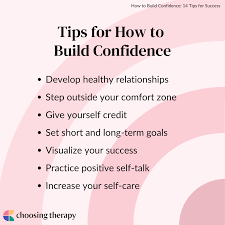
How to Build Self-Confidence: Step-by-Step
Here’s how you can start building real, lasting confidence today.
- Set Small, Achievable Goals
Start small. Instead of saying “I want to become the best student in the class,” try something specific like:
- “I will complete all my homework on time this week.”
- “I will ask one question in class today.”
When you achieve small goals consistently, you start believing in your ability to succeed. This builds momentum—and confidence.
✅ Study Rhino Tip: Keep a “Confidence Journal” to track your wins, no matter how small. Seeing your progress written down boosts belief in yourself.
- Challenge Negative Thoughts
Everyone has an inner critic. But you don’t have to listen to it.
If your mind says:
“I’ll never be good at math.”
Counter it with:
“Math is tough, but I’m improving with practice.”
This is called cognitive restructuring—changing the way you think about challenges.
✅ Try This: Write down your most common negative thoughts and create a positive response to each one.
- Practice Self-Care
Confidence starts with how you treat yourself. If you’re always tired, stressed, or ignoring your physical needs, confidence suffers.
Make sure you’re:
- Sleeping enough
- Eating well
- Taking breaks
- Exercising regularly
These simple acts of care send a message to your brain: I matter. I’m worth taking care of.
- Learn New Skills
Confidence often grows with competence. The more you know and the more skills you have, the more capable you feel.
Try:
- Learning a new language
- Improving your writing
- Practicing public speaking
- Joining a club or extracurricular activity
Each new skill is like adding a brick to the strong foundation of your self-esteem.
✅ Study Rhino Recommends: Start with something you’re curious about—not just something you’re “supposed” to learn.
- Celebrate Progress, Not Perfection
Nobody is perfect. Confident people accept that mistakes are part of learning. They don’t beat themselves up for every error.
Instead of waiting until you’re 100% perfect, celebrate when you’re better than yesterday. Progress, even slow progress, is always a reason to be proud.
✅ Mini Habit: At the end of each week, write down 3 things you improved at.
- Surround Yourself with Positivity
Confidence grows in a healthy environment. If you’re surrounded by people who put you down or always compete, it’s hard to feel good about yourself.
Find friends, classmates, teachers, or mentors who:
- Encourage your efforts
- Celebrate your strengths
- Help you grow through feedback
✅ Study Rhino Reminder: It’s okay to step back from toxic people, even if they’re classmates or close friends.
- Learn from Failure Without Fear
Failure isn’t the opposite of confidence—it’s the pathway to it. Every successful person has failed. What sets them apart is how they responded.
Instead of saying “I failed,” try:
- “What can I learn from this?”
- “How can I try differently next time?”
Turning mistakes into lessons turns you into a more confident, capable learner.
✅ Quick Exercise: Write about a failure you’ve experienced. Now list three lessons you learned from it.
- Develop Body Language That Shows Confidence
Even before you speak, your body can communicate confidence. You can actually “trick” your brain into feeling more confident by using confident posture.
Try:
- Standing tall
- Making eye contact
- Smiling genuinely
- Speaking clearly and slowly
It may feel strange at first, but your brain begins to associate this posture with confidence—and you start to believe it.
- Face Your Fears (One at a Time)
Confidence is built when you do the things you’re scared of. You don’t need to do everything at once. Start small.
Afraid of speaking in public?
- Start by reading out loud at home
- Then present to a friend
- Then raise your hand in class
Each step you take builds courage—and confidence follows.
- Visualize Success
Before a big event—an exam, presentation, or competition—take five minutes to visualize it going well.
Close your eyes and imagine:
- Walking in confidently
- Doing your best
- Handling challenges with calmness
Visualization trains your brain for success. Athletes, speakers, and leaders all use this technique—and you can too.
Real-Life Examples
Let’s take a look at two fictional student stories that show how confidence is built, not born.
🧑🎓 Aanya, 15 – Overcoming Stage Fear
Aanya loved writing poetry but was terrified of reading it aloud. She decided to face her fear by joining her school’s literary club. She started by sharing her poems in small groups, then volunteered for a local reading event. She stumbled a bit, but finished strong. Today, Aanya hosts poetry workshops for younger students. Her secret? “I just kept showing up, even when I was nervous.”
👨🎓 Rohan, 17 – From “I Can’t” to “I’ll Try”
Rohan used to say “I can’t do math” every time he saw equations. His teacher encouraged him to work in short 20-minute sessions and reward himself after. Rohan began to see small improvements. When he passed his first test in months, it boosted his belief. Now, math isn’t his favorite subject—but he no longer says “I can’t.” He says, “I’ll try.”
Final Thoughts: Confidence Is a Journey
Self-confidence isn’t built overnight. It’s something you grow little by little, every time you step out of your comfort zone, challenge your fears, and believe in your ability to learn and adapt.
At Study Rhino, we want every student to believe in their worth—not because of a score or someone else’s opinion, but because of the incredible potential they hold within.
So, the next time you feel unsure or nervous, remember:
✅ Confidence is not about being fearless—it’s about acting despite fear.
✅ Confidence is not about being perfect—it’s about growing through effort.
✅ Confidence is not something others give you—it’s something you build every day.