
Self-confidence is a powerful attribute that can significantly enhance a student’s academic and social experiences. It influences the way students perceive themselves, tackle challenges, interact with peers, and approach their studies. As students navigate the different phases of their school journey, building self-confidence becomes essential to their overall well-being and success. Whether it’s overcoming shyness, dealing with peer pressure, or managing academic expectations, having strong self-confidence can help students thrive in both their personal and educational lives.
This article explores various strategies and tips for building self-confidence during school life. We will delve into practical advice, personal reflection, and tips for students to implement in their daily lives. By the end, students, educators, and parents will have a comprehensive understanding of how to foster self-confidence in a school setting.
Understanding Self-Confidence
Before exploring the methods to build self-confidence, it’s important to understand what self-confidence is and how it affects students’ lives. Self-confidence refers to a person’s belief in their abilities, qualities, and judgment. It’s a sense of assurance that comes from within, helping individuals navigate challenges, trust their decisions, and face the world with a positive outlook.
In the context of school life, self-confidence is critical because it influences:
Academic performance: Confident students are more likely to take risks, ask questions, and engage in learning opportunities.
Social interactions: Confident students find it easier to make friends, participate in group activities, and maintain positive relationships.
Emotional resilience: Self-confident students can cope with setbacks, failure, and criticism more effectively.
The Importance of Building Self-Confidence in School Life
Self-confidence in school life is crucial for several reasons:
Improved Academic Performance: Confident students are not afraid to voice their opinions, ask questions, and engage actively in class discussions. This proactive attitude not only boosts their learning but also encourages academic growth. When students feel sure of their abilities, they are more willing to participate in challenging tasks and explore new subjects.
Better Social Relationships: School life isn’t just about academics; it’s also about social development. Self-confident students tend to form stronger friendships and engage in healthy peer relationships. They can handle peer pressure, resolve conflicts, and express themselves clearly.
Emotional Well-being: Confidence is closely linked to emotional health. Students with high self-esteem tend to experience less anxiety and depression, as they believe in their capacity to handle life’s challenges. They are also more likely to bounce back from failures, seeing them as opportunities for growth.
Increased Motivation: Self-confidence fuels motivation. When students believe in their abilities, they set higher goals for themselves and work harder to achieve them. This intrinsic motivation is a key factor in long-term success.
Practical Tips for Building Self-Confidence
1. Setting Achievable Goals
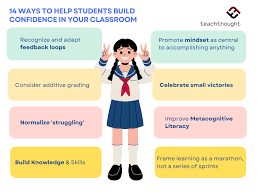
Setting small, realistic goals is one of the best ways to build self-confidence. When students achieve these goals, they gain a sense of accomplishment that boosts their confidence. It’s essential that these goals are manageable and specific so that they can be achieved in a reasonable time frame. For example, a student might set a goal to complete all their homework on time for a week or to participate in class discussions more often.
By breaking down large tasks into smaller steps, students can see their progress along the way, which reinforces their belief in their ability to succeed.
2. Celebrating Small Successes
It’s important to acknowledge and celebrate even the smallest achievements. When students recognize their progress, it reinforces a positive self-image. Whether it’s a good grade on a test, successfully completing a project, or making a new friend, celebrating successes helps build momentum for future accomplishments.
Parents, teachers, and peers can play a crucial role in recognizing and appreciating these milestones, which helps students internalize their success.
3. Encouraging Self-Reflection
Self-reflection is a powerful tool for building self-confidence. When students reflect on their strengths, skills, and past achievements, they develop a deeper understanding of their capabilities. Encouraging students to keep journals, where they write about their experiences, successes, and challenges, can help them track their personal growth.
This practice allows students to focus on what went well, learn from their mistakes, and continuously improve. Additionally, reflecting on the progress they’ve made reminds them of their strengths and boosts their confidence.
4. Developing Positive Self-Talk
Negative self-talk is one of the most significant barriers to building self-confidence. When students constantly criticize themselves or focus on their weaknesses, it can lead to a lack of motivation and self-doubt. Teaching students to replace negative thoughts with positive affirmations can be a game-changer.
For instance, instead of thinking, “I’m terrible at math,” a student could say, “I’m working on improving my math skills every day.” This shift in mindset helps reframe challenges as opportunities for growth, making students more confident in their abilities.
5. Encouraging Risk-Taking
Confidence grows when students step out of their comfort zone and take on new challenges. Encouraging students to take small risks—whether it’s answering a question in class, trying out for a school play, or volunteering for a group project—can significantly boost their confidence. By attempting new things, students prove to themselves that they are capable of handling challenges, even when the outcome is uncertain.
6. Modeling Confidence
Teachers, parents, and mentors play a significant role in shaping a student’s sense of self-worth. When adults model confident behavior—such as being open to new experiences, handling setbacks with grace, and acknowledging their own strengths—students are more likely to adopt similar behaviors. Adults can demonstrate the importance of self-confidence by offering positive reinforcement, avoiding harsh criticism, and supporting students through difficult moments.
7. Building a Supportive Environment
A supportive environment is key to building self-confidence. Students thrive when they are surrounded by positive, encouraging peers and mentors. Creating an atmosphere where mistakes are seen as opportunities for learning, rather than failures, helps students feel safe and confident in their abilities. Group activities, peer mentoring, and team projects can be excellent ways to foster collaboration and support among students.
When students feel supported, they are more likely to take risks, ask for help when needed, and contribute confidently to discussions.
8. Emphasizing Effort Over Results
In many schools, the focus is often on grades and results, but this can sometimes lead to anxiety and self-doubt. Encouraging students to focus on effort, rather than just outcomes, helps them feel more in control of their learning. When students recognize that persistence, hard work, and dedication are just as important as getting the right answers, they begin to see that mistakes are a part of the learning process. This mindset fosters resilience and confidence.
Teachers and parents can reinforce this by praising effort and improvement rather than just outcomes.
9. Encouraging Physical Activity
Physical activity is not only beneficial for physical health but also plays a significant role in boosting mental well-being. Exercise promotes the release of endorphins, which can help students feel more confident, energized, and motivated. Encouraging students to participate in sports, physical activities, or even just regular walks can have a positive impact on their self-esteem and confidence.
10. Providing Opportunities for Leadership
Giving students leadership opportunities can be an effective way to build self-confidence. By taking on roles such as class representative, team captain, or project leader, students learn to take initiative, make decisions, and communicate effectively. These experiences help students realize their potential and develop leadership skills, all of which contribute to stronger self-confidence.
Overcoming Common Barriers to Self-Confidence
While building self-confidence is important, students often face common challenges that can hinder their growth. Some of these barriers include:
Fear of failure: Many students fear making mistakes, which can prevent them from trying new things. It’s important to normalize failure as a part of the learning process and encourage students to see mistakes as opportunities for growth.
Peer pressure: The desire to fit in can undermine self-confidence, especially if students feel pressured to conform. Building a strong sense of self-worth and encouraging individuality can help students resist negative peer pressure.
Perfectionism: Some students may feel that they have to be perfect in everything they do. Helping them set realistic expectations and embrace imperfection can reduce anxiety and build confidence.
Conclusion
Building self-confidence in school life is a journey that requires patience, persistence, and support. By setting achievable goals, celebrating successes, reflecting on personal growth, and fostering a supportive environment, students can develop the self-assurance needed to succeed academically and socially. Teachers, parents, and peers all play crucial roles in helping students build confidence. With the right strategies and mindset, students can navigate the challenges of school life with resilience, self-belief, and a positive attitude, setting the foundation for lifelong success.