

In today’s fast-paced world, mental health is becoming an increasingly important topic of conversation. Among the various therapeutic approaches available, Cognitive Behavioral Therapy (CBT) stands out as one of the most researched, effective, and widely practiced forms of treatment for a variety of psychological issues. Whether you’re a student curious about psychology, a professional looking for self-improvement, or someone interested in mental health awareness, understanding CBT offers valuable insights into how thoughts, emotions, and behaviors are deeply interconnected.
In this article, we’ll explore what Cognitive Behavioral Therapy is, how it works, its key principles, techniques, benefits, and limitations. We’ll also look at real-world applications and why CBT has become a cornerstone in modern psychology.
What is Cognitive Behavioral Therapy?
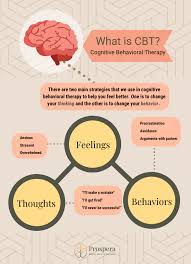
Cognitive Behavioral Therapy (CBT) is a type of psychotherapeutic treatment that helps individuals identify and change destructive or disturbing thought patterns that negatively influence behavior and emotions. CBT focuses on the idea that our thoughts (cognitions), feelings (emotions), and behaviors are interconnected, and that changing negative thoughts can lead to changes in feelings and behaviors.
Developed in the 1960s by Dr. Aaron T. Beck, CBT was initially used to treat depression but has since evolved to address a wide range of mental health conditions, including anxiety disorders, post-traumatic stress disorder (PTSD), eating disorders, substance abuse, and more.
Unlike traditional talk therapies, which often delve deeply into past experiences, CBT is generally short-term, goal-oriented, and problem-focused. It empowers individuals with practical strategies to deal with current challenges.
The Core Principles of CBT
To understand CBT, it’s crucial to grasp its foundational principles:
Cognitive distortions: People often have distorted ways of thinking that can reinforce negative emotions. CBT helps individuals recognize and correct these distortions.
Behavior affects emotions: Our actions often contribute to our emotional state. Modifying behaviors can directly influence mood.
Skills-focused: CBT teaches specific skills for identifying, challenging, and changing unhelpful thoughts and behaviors.
Present-centered: While CBT acknowledges past experiences, it emphasizes current thoughts and actions.
Collaborative approach: Therapist and client work together as a team, setting goals and tracking progress.
Common Cognitive Distortions
One major goal of CBT is to address cognitive distortions—irrational or exaggerated thought patterns that can contribute to emotional distress. Some common examples include:
All-or-nothing thinking: Seeing things in black-and-white categories.
Overgeneralization: Viewing a single negative event as a never-ending pattern of defeat.
Catastrophizing: Expecting the worst-case scenario to happen.
Emotional reasoning: Assuming that negative emotions reflect reality (“I feel scared, so I must be in danger”).
Personalization: Believing you are responsible for events outside your control.
Recognizing these distortions is the first step toward changing them.
Techniques Used in CBT
CBT uses a variety of techniques to help individuals reframe their thinking and modify their behaviors. Some key techniques include:
1. Cognitive Restructuring or Reframing
This involves identifying negative thought patterns and challenging their validity. For example, if a student thinks, “I’m going to fail this test,” CBT would encourage examining the evidence for and against this belief and developing a more balanced thought like, “I’ve prepared well, and I can do my best.”
2. Behavioral Activation
Particularly effective for depression, this technique encourages individuals to engage in activities that bring them pleasure or a sense of accomplishment, helping to break the cycle of inactivity and low mood.
3. Exposure Therapy
Used for anxiety and phobias, exposure therapy gradually exposes individuals to feared situations to reduce avoidance behaviors and desensitize fear responses.
4. Thought Records
Clients keep journals to track negative thoughts, emotions, and behaviors, helping them recognize patterns and triggers.
5. Problem-Solving
CBT often involves teaching structured problem-solving strategies to handle stressful or difficult situations more effectively.
The Structure of a CBT Session
A typical CBT session follows a structured format:
Check-in: Discuss mood, events, and homework since the last session.
Agenda setting: Collaboratively decide what topics to focus on.
Review homework: Examine previous tasks or thought records.
Introduce new skills or techniques: Learn and practice new cognitive or behavioral strategies.
Assign homework: Provide exercises to practice between sessions.
Summary and feedback: Recap the session and gather feedback from the client.
This structured approach helps maintain focus and track progress over time.
Benefits of CBT
CBT is popular because of its practical approach and significant benefits:
Effective for a wide range of disorders: Including depression, anxiety, PTSD, OCD, phobias, eating disorders, and substance abuse.
Short-term: Many CBT programs last between 8 to 20 sessions.
Skill-building: Provides lifelong skills for managing thoughts and emotions.
Evidence-based: Thousands of studies validate CBT’s effectiveness.
Can be adapted: CBT can be modified for individual, group, couple, or online therapy.
Limitations of CBT
While CBT is highly effective for many, it’s not a one-size-fits-all solution. Some limitations include:
Not suitable for all cases: Individuals with very complex mental health conditions (such as severe personality disorders or psychosis) may need additional types of therapy.
Requires commitment: Success depends heavily on active participation and homework completion.
Focuses mainly on the present: Some people may need deeper exploration of past traumas, which CBT typically addresses less directly.
Can feel rigid: Some clients feel that the structured nature of CBT doesn’t fully address emotional depth or relational issues.
Real-World Applications of CBT
Today, CBT is used in various settings beyond traditional therapy rooms:
Schools: Programs teach students resilience, coping skills, and positive thinking.
Workplaces: Stress management workshops based on CBT principles help employees handle job-related pressures.
Online therapy: Platforms like BetterHelp and Talkspace offer CBT via messaging and video calls.
Self-help: Many books and online courses provide CBT-based techniques for self-guided learning.
CBT’s flexibility makes it an invaluable tool for enhancing mental wellness across different demographics and environments.
Future of CBT
With technology advancing, the future of CBT looks promising:
Virtual Reality (VR) CBT: Used to treat phobias, PTSD, and social anxiety by simulating real-life scenarios.
AI-driven therapy bots: Apps like Woebot offer CBT-based conversations to users needing immediate support.
Expanded cultural adaptations: Researchers are working on making CBT more culturally sensitive and applicable worldwide.
As awareness about mental health grows, CBT will likely continue evolving to meet the changing needs of diverse populations.
Conclusion
Cognitive Behavioral Therapy is a practical, empowering, and evidence-based approach to managing mental health challenges. By focusing on the powerful connection between thoughts, feelings, and behaviors, CBT provides individuals with the tools they need to navigate life’s difficulties more effectively.
At Study Rhino, we believe that understanding therapies like CBT is crucial—not just for psychology students, but for anyone interested in personal growth, resilience, and emotional wellbeing. Whether you’re applying these principles to your own life, studying to become a therapist, or simply seeking to be more informed, CBT offers timeless wisdom and practical strategies for building a healthier mind.