
By Study Rhino
Communication is the backbone of success, whether in academics, career, or personal life. Great communicators aren’t born — they are made through practice, patience, and the willingness to learn. At Study Rhino, we believe that building strong communication skills is one of the most valuable investments students can make for their future.
In this guide, we will walk you through what communication skills are, why they matter, and practical ways to improve them — starting today.
What Are Communication Skills?
Communication skills are the abilities you use to give and receive different kinds of information. It includes:
- Speaking clearly and confidently
- Listening actively and empathetically
- Writing effectively
- Understanding non-verbal cues like body language
- Adapting your message depending on the audience
Good communication is not just about talking; it’s about making sure your message is heard, understood, and respected.
Why Are Communication Skills Important?
You might wonder, “Isn’t being good at my studies enough?” The truth is, no matter how intelligent or knowledgeable you are, poor communication can limit your opportunities.
Strong communication skills help you:
- Perform better in group projects and presentations
- Build lasting friendships and relationships
- Succeed in job interviews and networking events
- Lead teams and manage conflicts effectively
- Express yourself with confidence and clarity
In short, communication opens doors that knowledge alone cannot.
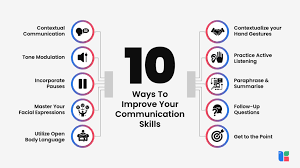
12 Practical Ways to Improve Your Communication Skills
Now, let’s get into actionable tips you can start using today:
- Practice Active Listening
Communication is a two-way street. Good communicators listen more than they speak.
How to practice:
- Maintain eye contact.
- Nod or use small verbal comments like “I see” or “Go on.”
- Avoid interrupting the speaker.
- Summarize what the other person said before responding.
Tip: Treat every conversation as a chance to learn something new.
- Expand Your Vocabulary
A rich vocabulary helps you express your thoughts more precisely.
How to practice:
- Read widely — books, newspapers, blogs.
- Note down new words and practice using them.
- Play word games like Scrabble or crosswords.
Tip: Use new words naturally. Don’t force complicated vocabulary into simple conversations.
- Engage in Public Speaking
Public speaking is a fast-track way to become a better communicator.
How to practice:
- Join clubs like Toastmasters or your school’s debate society.
- Start small by speaking up in class discussions.
- Practice speeches in front of a mirror.
Tip: Focus on your message, not your fear.
- Work on Your Body Language
Non-verbal communication can sometimes speak louder than words.
How to practice:
- Stand tall and maintain good posture.
- Smile genuinely when appropriate.
- Use hand gestures naturally.
- Maintain appropriate eye contact.
Tip: Record yourself speaking and observe your body language.
- Ask for Feedback
Honest feedback is a gift that accelerates your growth.
How to practice:
- Ask teachers, friends, or mentors how you come across.
- Be open to constructive criticism.
- Work actively on suggested areas.
Tip: Don’t take feedback personally; use it as a roadmap for improvement.
- Master the Art of Storytelling
Storytelling is a powerful way to engage people and make your message memorable.
How to practice:
- Practice sharing personal experiences in a structured way (beginning, middle, end).
- Include emotions and details to make your stories relatable.
Tip: Every presentation or conversation can be improved with a good story.
- Develop Emotional Intelligence
Understanding your emotions — and others’ — enhances communication.
How to practice:
- Reflect on your feelings before speaking.
- Pay attention to others’ emotions and respond with empathy.
- Stay calm in heated discussions.
Tip: Sometimes, how you say something matters more than what you say.
- Tailor Your Message to Your Audience
Good communicators adjust their tone, language, and style depending on who they are speaking to.
How to practice:
- Think: “Who am I talking to?” before you start speaking.
- Use simpler words when speaking to children; be formal when speaking to professionals.
Tip: Communication is about the listener, not the speaker.
- Improve Your Writing Skills
Clear writing is a foundation for clear thinking.
How to practice:
- Write daily — journals, essays, emails, anything.
- Edit your writing to remove unnecessary words.
- Read good writers and learn from their styles.
Tip: Good writing mirrors good thinking — practice both.
- Learn to Handle Difficult Conversations
Tough conversations are part of life. Learning to navigate them is a sign of true maturity.
How to practice:
- Stay calm and respectful even if the other person is upset.
- Focus on the issue, not the person.
- Use “I” statements (“I feel” instead of “You always”).
Tip: Courageous conversations build trust.
- Practice Empathy
Empathy is the ability to understand and share the feelings of another. It’s the heart of effective communication.
How to practice:
- Listen without judgment.
- Acknowledge others’ feelings even if you disagree.
- Ask thoughtful questions to understand better.
Tip: Empathy makes you not just a better communicator, but a better human being.
- Stay Curious
Curiosity fuels great conversations.
How to practice:
- Ask open-ended questions (“What do you think about…?”)
- Explore different cultures, perspectives, and ideas.
- Never assume you know everything.
Tip: A curious mind leads to richer, more meaningful connections.
Quick Daily Exercises to Build Communication Muscles
Here’s a simple plan you can use:
| Activity | Time Needed | Purpose |
| Read aloud from a book or article | 10 minutes | Improve pronunciation and flow |
| Listen to a podcast and summarize it | 15 minutes | Sharpen listening and summarizing skills |
| Write a short journal entry | 10 minutes | Practice clear and structured writing |
| Initiate a meaningful conversation | Ongoing | Build confidence and connection |
Consistency beats intensity. A little practice every day goes a long way!
Common Mistakes to Avoid
While practicing, watch out for these pitfalls:
- Talking too much without listening
- Using jargon or complicated words unnecessarily
- Not being mindful of your body language
- Reacting emotionally without thinking
- Assuming instead of asking
The good news? All of these mistakes are correctable with awareness and practice.
Conclusion
Improving your communication skills is like building a bridge — one stone at a time. Every conversation, every email, every speech is an opportunity to become better.
At Study Rhino, we encourage you to see communication not as a subject, but as a lifelong journey. The better you communicate, the more influence, understanding, and success you will achieve — not just in school, but everywhere life takes you.
So start today. Listen better. Speak clearer. Write sharper. And most importantly, connect deeper.
The world is waiting to hear your voice. Make it count!
Would you also like me to suggest a short social media post or infographic version to go with this article? 🎯