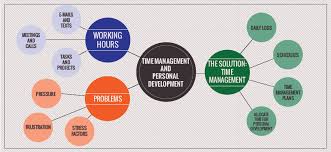

Personal growth is not a one-time event; it’s a continuous, lifelong process. It requires effort, discipline, and reflection. However, even with the best intentions, you may find yourself struggling if your days are filled with distractions, missed deadlines, and overwhelming tasks.
Here’s why time management is crucial for your personal development:
- Efficiency: Time management helps you accomplish more in less time, freeing up hours for activities that nourish your mind and soul.
- Clarity: Good time management clears mental clutter, enabling you to set clear goals and focus on what truly matters.
- Reduced Stress: When you manage your schedule wisely, you experience less anxiety about unfinished work and impending deadlines.
- Continuous Learning: Personal growth thrives when you make time for self-education, new experiences, and skill-building.
- Balance: Time management allows you to balance career, education, relationships, and self-care — essential pillars for a fulfilled life.
Without effective time management, personal growth often remains an unfulfilled dream. With it, you can make steady, meaningful progress toward your goals.
The Principles of Effective Time Management
Before we jump into strategies, let’s understand some core principles that form the foundation of time management for personal growth.
- Set Clear, Prioritized Goals
Not all tasks are created equal. Some activities yield greater personal growth than others. Identify what matters most to you — whether it’s learning a new language, improving your fitness, or cultivating emotional intelligence — and prioritize tasks that align with these goals.
Tip: Use the SMART goal framework: Specific, Measurable, Achievable, Relevant, Time-bound.
- Plan Ahead
Failing to plan is planning to fail. Effective individuals plan their days, weeks, and months in advance. A good plan ensures you’re not just busy — you’re productive.
Tip: End each day by outlining tomorrow’s top 3 priorities.
- Focus Deeply
Multitasking often leads to mistakes and shallow work. Deep focus allows you to complete tasks faster and at a higher quality, leading to more significant personal development.
Tip: Practice the Pomodoro Technique — 25 minutes of deep work followed by a 5-minute break.
- Learn to Say No
Growth sometimes means turning down opportunities that don’t align with your main goals. Guard your time fiercely.
Tip: Politely decline tasks or commitments that don’t serve your bigger picture.
- Reflect and Adjust
Life isn’t static, and neither are you. Regularly assess your time management habits. Are you getting closer to your personal goals? What needs adjusting?
Tip: Hold a weekly 15-minute self-review session.
Time Management Strategies for Personal Growth
Now that we understand the principles, let’s explore powerful strategies that you can apply right away.
- Time Blocking
What it is: Scheduling your entire day into blocks of time dedicated to specific tasks.
Why it works: Time blocking minimizes distractions, sets clear expectations, and helps you focus deeply on one activity at a time.
Example:
- 7:00–8:00 AM: Morning routine & journaling
- 8:00–10:00 AM: Deep work session (studying, project work)
- 10:00–10:30 AM: Break
- 10:30–12:00 PM: Skill development (e.g., coding, writing)
- The Eisenhower Matrix
What it is: A tool that helps you categorize tasks based on urgency and importance.
Matrix Layout:
- Urgent and important → Do immediately.
- Important but not urgent → Schedule it.
- Urgent but not important → Delegate it.
- Neither urgent nor important → Eliminate it.
Why it works: Helps you focus on activities that truly contribute to personal growth rather than reacting to every “urgent” distraction.
- Setting Micro-Goals
Large goals often feel overwhelming. Break them down into smaller, manageable tasks called micro-goals.
Example:
Instead of setting “Learn Spanish,” create micro-goals like:
- Learn 50 new words this week.
- Complete one Duolingo lesson every day.
Small wins lead to big results.
- The 80/20 Rule (Pareto Principle)
What it is: 80% of your results come from 20% of your efforts.
How to apply it: Identify which activities produce the most growth and focus on them. Eliminate or delegate low-value tasks.
Example:
If reading leadership books leads to bigger improvements in your communication skills than random social media browsing, prioritize reading.
Overcoming Common Time Management Challenges
Even with strategies in place, challenges will arise. Here’s how to tackle the most common ones:
- Procrastination
- Solution: Use a “5-Minute Rule.” Commit to working on a task for just five minutes. Often, starting is the hardest part, and momentum will carry you forward.
- Distractions
- Solution: Create a distraction-free environment. Silence your phone, close unnecessary browser tabs, and let others know your focus time.
- Overcommitment
- Solution: Set boundaries. It’s okay to say no or to ask for help. Remember: Protecting your time is protecting your growth.
- Burnout
- Solution: Schedule rest just like you schedule work. Personal growth requires energy, so prioritize sleep, nutrition, and relaxation.
Tools to Help You Master Your Time
You don’t have to do it all manually! Here are tools that can support your time management journey:
- Google Calendar: For scheduling and time blocking
- Todoist or Microsoft To Do: For task management
- Notion: For project planning and goal tracking
- Forest App: Encourages focus by growing virtual trees when you stay off your phone
- RescueTime: Tracks how you spend your time on devices
Experiment with different tools and find the combination that fits your personality and workflow.
Real-Life Examples of Time Management for Growth
Marie Curie, the first woman to win a Nobel Prize, was meticulous about her time. Between teaching, research, and raising her children, she used structured schedules to carve out time for her groundbreaking experiments.
Elon Musk uses 5-minute time blocks, carefully allocating each part of his day to maximize productivity across multiple companies.
Malala Yousafzai, despite her activism and public engagements, dedicated specific hours daily for education to maintain her personal academic growth, eventually earning a degree from Oxford University.
Each of these individuals treated time as a non-renewable resource — and so can you.
Final Thoughts: Growth Happens One Day at a Time
At Study Rhino, we know that personal growth isn’t about giant leaps; it’s about small, intentional steps taken consistently. Effective time management isn’t about cramming more tasks into your day. It’s about aligning your time with your values, goals, and dreams.
Here’s your starting point:
- Define your growth goals.
- Design a plan using strategies like time blocking and micro-goals.
- Commit to small daily actions.
- Reflect, adjust, and celebrate your progress.
Time doesn’t wait.
But with the right management, you can make every moment count toward becoming your best self.
Start today. Your future self will thank you