
Virtual Reality (VR) has come a long way since its inception, evolving from simple simulations to a cutting-edge technology that promises to revolutionize various industries, including education, healthcare, entertainment, and business. With continuous advancements in hardware, software, and content creation, VR is poised to become an integral part of everyday life. This article will explore the future of Virtual Reality, focusing on its potential to shape the future of education, healthcare, entertainment, and other sectors.
1. What is Virtual Reality?
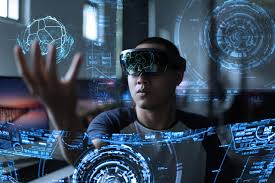
Virtual Reality is a computer-generated simulation that immerses users in a digital environment, typically through the use of specialized headsets, motion controllers, and sensors. By interacting with the VR environment, users can experience a sense of presence, as if they are truly within the virtual world. Unlike traditional media such as videos or books, VR provides an interactive, immersive experience that engages multiple senses, including sight, sound, and touch.
2. The Evolution of Virtual Reality Technology
VR has undergone significant technological advancements over the past few decades. Early VR systems were bulky, expensive, and primarily used for research and military purposes. However, with the advent of consumer-grade VR headsets such as the Oculus Rift, HTC Vive, and PlayStation VR, the technology became more accessible and affordable to the public. These devices offered high-quality graphics and immersive experiences, opening up new possibilities for entertainment, gaming, and other applications.
In recent years, VR technology has continued to improve, with lighter, more comfortable headsets, improved resolution, and better tracking capabilities. Additionally, advancements in software development, such as AI-powered simulations and 3D modeling, have further enhanced the realism and interactivity of VR experiences.
3. The Future of Virtual Reality in Education
One of the most promising areas where VR is expected to have a transformative impact is education. Traditional classroom learning, while effective, often lacks the interactive and immersive elements that VR can provide. In the future, VR has the potential to revolutionize the way we learn, offering immersive and engaging educational experiences.
a. Immersive Learning Environments
VR enables students to enter entirely new worlds without leaving the classroom. Imagine a history lesson where students can explore ancient civilizations, walking through the streets of ancient Rome or visiting the pyramids of Egypt. In a biology class, students could explore the human body in 3D, observing cells, organs, and systems from an entirely new perspective. This immersive learning approach can help students better understand complex concepts and retain information more effectively.
b. Hands-on Training and Simulation
VR also allows for hands-on training in fields where real-world practice may be too dangerous or costly. For example, medical students can practice performing surgeries in a virtual environment before working with real patients. Similarly, engineering students can simulate building and testing prototypes, or pilots can train in virtual cockpits before flying real aircraft. These virtual simulations provide a safe, low-risk environment for learning, enabling students to gain valuable experience without the consequences of mistakes in the real world.
c. Accessibility and Global Learning
Another advantage of VR in education is its ability to make learning more accessible. Students from different parts of the world can participate in virtual classrooms and collaborate in real-time, breaking down geographical barriers. Moreover, VR can provide tailored learning experiences for students with disabilities, offering adaptive environments that cater to different learning needs.
d. Personalized Learning
With the help of artificial intelligence, VR can offer personalized learning experiences that adapt to the needs of individual students. Whether it’s adjusting the pace of lessons or providing targeted feedback, VR can create customized learning paths that help students achieve their educational goals more efficiently.
4. VR in Healthcare: A Game Changer
The healthcare industry is another sector where Virtual Reality is expected to have a significant impact. From medical training to patient treatment, VR is poised to revolutionize healthcare delivery.
a. Medical Training and Surgical Simulations
In the medical field, VR has already made strides in providing realistic, risk-free environments for training. Surgeons can practice complex procedures in virtual simulations, gaining experience without the need for real patients. VR can also be used to train medical students in anatomy, helping them visualize and explore the human body in 3D. These immersive simulations allow for a more interactive and hands-on approach to medical education, improving the quality of training and preparation for real-world situations.
b. Pain Management and Therapy
In addition to training, VR has shown promise in treating various medical conditions. For example, VR therapy is increasingly being used to help manage pain and anxiety in patients undergoing medical procedures. By immersing patients in calming virtual environments, VR can distract them from pain and reduce the need for pain medications. It has also been used in the treatment of post-traumatic stress disorder (PTSD), where patients can gradually confront and process traumatic memories in a controlled, virtual environment.
c. Physical Rehabilitation
Virtual Reality is also being explored as a tool for physical rehabilitation. VR-based exercises and simulations can help patients recover from injuries or surgeries by guiding them through physical movements in a virtual space. These exercises are often more engaging and motivating than traditional therapy, leading to better outcomes for patients.
5. Virtual Reality in Entertainment and Gaming
Entertainment and gaming have been at the forefront of VR development, with many companies and developers creating immersive experiences for users. In the future, VR will continue to push the boundaries of interactive entertainment.
a. Fully Immersive Gaming Experiences
In the gaming industry, VR has the potential to create fully immersive experiences where players can physically interact with the game world. Instead of simply controlling characters with a controller, players can become part of the game, moving around in 360 degrees, interacting with objects, and even collaborating with other players in a shared virtual space. With the development of haptic feedback systems, VR gaming could offer realistic sensations of touch, making the experience even more lifelike.
b. Immersive Storytelling
VR also opens up new possibilities for storytelling, allowing users to step inside the narrative and experience the story from a first-person perspective. This could transform the film and television industry, enabling viewers to immerse themselves in the story rather than merely watching it unfold. Imagine watching a thriller where you are the main character, making decisions and experiencing the story as it happens around you. This shift in how stories are told will provide entirely new ways for creators to engage their audiences.
c. Live Events and Concerts
In addition to gaming and storytelling, VR can also be used to experience live events in a virtual space. Concerts, theater performances, and sports events could be broadcasted in VR, allowing users to attend these events from the comfort of their homes. VR could provide a front-row seat to live performances, offering fans a more interactive and engaging experience than traditional broadcasts.
6. Virtual Reality in Business and Industry
The business world is already beginning to harness the power of VR to enhance productivity and collaboration. In the future, VR will play an even larger role in transforming how companies operate and how employees interact with one another.
a. Remote Work and Virtual Collaboration
As remote work becomes more prevalent, VR could offer a solution for companies looking to enhance collaboration among distributed teams. Instead of relying on video calls and emails, employees could meet in virtual spaces, where they can collaborate on projects, attend meetings, and socialize with colleagues. This level of immersion could foster better communication and a stronger sense of presence among remote workers.
b. Virtual Prototyping and Design
VR is already being used in product design and development to create virtual prototypes of products before they are built. Designers can explore and test virtual models, making adjustments and improvements in real-time. This reduces the need for physical prototypes, saving time and resources in the design process. In industries such as automotive, architecture, and fashion, VR has the potential to streamline the development process and lead to more innovative designs.
c. Customer Experiences and Retail
In retail, VR could offer customers the ability to try products virtually before making a purchase. Whether it’s trying on clothes, testing out furniture, or visualizing home decor, VR could provide a more immersive and interactive shopping experience. Companies can also use VR for virtual tours, allowing customers to explore destinations or view products in a 360-degree environment.
7. The Challenges Ahead for Virtual Reality
Despite its vast potential, the widespread adoption of VR still faces several challenges. These include issues such as the high cost of VR equipment, the need for powerful computing systems, and the potential for motion sickness or discomfort during prolonged use. Additionally, VR content creation is still in its infancy, and creating high-quality, engaging experiences requires significant time, effort, and investment.
Furthermore, the ethical implications of VR, such as privacy concerns, data security, and the potential for addiction, need to be carefully considered as the technology evolves.
8. Conclusion
The future of Virtual Reality is incredibly promising, with its potential to transform industries such as education, healthcare, entertainment, and business. As technology continues to evolve, VR will offer new ways of learning, working, and interacting with the world around us. While there are challenges to overcome, the opportunities for innovation and improvement are vast. As VR becomes more accessible and affordable, we can expect to see it become an integral part of our daily lives, shaping the future in ways we can only begin to imagine.
In education, VR will bring learning to life, offering immersive experiences that enhance understanding and engagement. In healthcare, it will revolutionize medical training and patient care, offering safer, more effective treatments. In entertainment, VR will take gaming, storytelling, and live events to new heights of immersion. And in business, it will redefine how companies operate, collaborate, and interact with customers. The future of VR is bright, and it holds the key to a more connected, interactive, and immersive world.