
Blockchain technology, often associated with cryptocurrency like Bitcoin, has evolved far beyond its initial use case. Today, its potential to revolutionize industries, including education, is gaining significant attention. In this article, we will explore how blockchain can transform education, enhance learning experiences, streamline administrative processes, and foster innovation in the education sector.
Understanding Blockchain Technology
Blockchain is a decentralized and distributed digital ledger technology that allows data to be stored across multiple locations in a secure, transparent, and immutable way. Each “block” of data is linked to a chain of previous blocks, forming a chronological record of transactions or information. This structure ensures that no single entity has control over the data, making it tamper-resistant and trustworthy.
Blockchain works through a consensus mechanism where transactions are validated by multiple participants in the network, eliminating the need for intermediaries. This transparency, security, and decentralization make blockchain ideal for various sectors, including education.
Key Benefits of Blockchain in Education
Blockchain technology brings a wide range of benefits to education. From enhancing data security to creating more accessible learning opportunities, here’s how blockchain can change the landscape of education:
1. Enhanced Security and Transparency
In education, maintaining the integrity of student records is crucial. Blockchain offers an unprecedented level of security and transparency, making it an ideal tool for managing academic records, certifications, and credentials.
Traditional student records are often stored in centralized databases, which can be vulnerable to hacking or unauthorized access. Blockchain, on the other hand, allows institutions to store student data across a decentralized network, ensuring that only authorized parties can access it. The use of encryption further enhances security, making it nearly impossible for anyone to alter or tamper with records without detection.
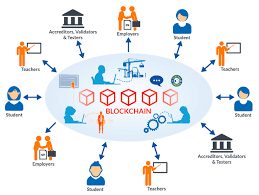
For example, student transcripts, diplomas, and certificates could be stored as verifiable digital assets on a blockchain. Employers, educational institutions, and other stakeholders could easily verify the authenticity of these documents, reducing the risk of fraud and enhancing trust in the educational system.
2. Streamlining Administrative Processes
Education systems often deal with complex administrative processes, including student registration, course enrollment, grading, and credential verification. Blockchain can streamline these processes by automating workflows and reducing reliance on intermediaries.
Smart contracts, which are self-executing contracts with predefined rules encoded in blockchain, can be used to automate administrative tasks such as course registration and fee payments. For instance, when a student registers for a course, the smart contract could automatically update their records, issue receipts, and notify relevant parties, all without the need for manual intervention.
Additionally, blockchain could simplify the process of transferring credits between institutions. Currently, transferring credits from one institution to another can be a time-consuming and error-prone process, requiring extensive paperwork and verification. With blockchain, the transfer of credits could be automated and securely recorded, making the process faster and more efficient.
3. Verification of Credentials
One of the most significant challenges in education today is verifying the authenticity of academic credentials. The rise of diploma mills and fake degrees has made it increasingly difficult for employers and institutions to trust the qualifications of potential candidates.
Blockchain technology can address this issue by providing a secure and immutable way to store academic credentials. Once a student earns a degree or certification, the relevant data can be recorded on the blockchain, creating a tamper-proof digital record. This record can then be easily shared with employers, other educational institutions, or government agencies for verification.
The use of blockchain for credential verification also allows for greater accessibility. Students can store and share their academic records without having to rely on their institutions to provide verification. This empowers learners to take control of their own educational journey and facilitates more efficient job searches and higher education applications.
4. Improved Learning Outcomes with Personalized Education
Blockchain can also play a key role in creating personalized learning experiences. With blockchain, it’s possible to track and store a student’s learning progress in a secure and transparent way. This data could include course completion rates, grades, assessments, and even feedback from instructors.
By having a comprehensive, decentralized record of their educational journey, students can gain more control over their learning. Blockchain can help identify areas where students may be struggling, allowing for more targeted interventions and personalized learning plans. This also ensures that students are recognized for their achievements, even if they are not part of traditional educational pathways.
Moreover, blockchain can enable lifelong learning. Learners can continue to add to their blockchain-based education records as they acquire new skills and certifications, whether through formal education or online courses. This creates a comprehensive digital portfolio that reflects a student’s continuous growth and development.
5. Decentralized Learning Platforms
Blockchain could pave the way for decentralized learning platforms, where learners and educators can directly interact without the need for intermediaries such as schools or universities. In such a system, students could access educational content, engage in peer-to-peer learning, and collaborate on projects, all while ensuring that their data is secure and under their control.
For instance, a blockchain-based learning platform could allow teachers to create and sell courses directly to students, cutting out the middlemen and potentially reducing the cost of education. Students could also earn cryptocurrency rewards for completing assignments, participating in discussions, or helping others with their learning. This would create a more flexible and self-directed learning environment.
Additionally, blockchain could support the creation of decentralized autonomous organizations (DAOs) within education. A DAO could be a virtual university or educational institution governed by the community, with decisions made through smart contracts and transparent voting mechanisms. This could lead to more democratic and inclusive educational environments.
6. Micro-Credentials and Digital Badges
Blockchain technology enables the creation of verifiable micro-credentials and digital badges. These are smaller, more specific achievements that students can earn as they progress through their educational journey. Micro-credentials could cover a wide range of topics, from technical skills to soft skills, and are often more practical and focused than traditional degrees.
For example, a student might earn a digital badge for completing an online course in coding or mastering a particular software tool. These micro-credentials can be easily stored on a blockchain, allowing students to share their achievements with potential employers or other educational institutions.
Micro-credentials have the potential to make education more accessible and personalized. They allow students to demonstrate their knowledge and skills in a way that is more aligned with the demands of the job market. Employers can use blockchain-based credentials to quickly assess a candidate’s qualifications and make more informed hiring decisions.
7. Fostering Innovation and Collaboration
Blockchain technology encourages innovation by creating new opportunities for collaboration. As the education sector adopts blockchain, it can foster a more open and collaborative approach to learning, research, and development.
For example, universities and research institutions could use blockchain to collaborate on research projects, share resources, and track the progress of various initiatives. Blockchain could ensure that all parties involved have access to the same information in real-time, promoting transparency and trust. Furthermore, blockchain could facilitate the sharing of intellectual property rights, making it easier for researchers and educators to collaborate while ensuring proper attribution.
Conclusion
Blockchain technology holds immense potential to transform education in multiple ways. From enhancing security and transparency in student records to enabling personalized learning experiences, the benefits of blockchain are vast. It promises to streamline administrative processes, improve the verification of credentials, and foster innovation and collaboration within the education sector.
As blockchain adoption grows, we can expect to see a more secure, efficient, and accessible educational ecosystem. However, the widespread implementation of blockchain in education will require overcoming several challenges, including regulatory hurdles, technological infrastructure, and stakeholder buy-in. Nonetheless, the future of blockchain in education looks promising, and its role in shaping the future of learning is undeniable.
In the coming years, as educational institutions, governments, and technology companies work together to explore the potential of blockchain, we may witness a paradigm shift in the way we approach education. Blockchain has the power to democratize learning, making education more inclusive, secure, and personalized for learners around the world