
Writing a book review is an excellent way to share your thoughts and reflections on a book. Whether you’re an avid reader or a student assigned to review a book, understanding how to write an effective and thoughtful review is a skill that can be developed over time. In this guide, we will explore how to write a compelling book review, offering tips and advice on structure, content, and style.
Why Write a Book Review?
Before diving into the process of writing a review, it’s important to understand why writing a book review can be valuable. Here are some reasons why book reviews matter:
- Critical Thinking: Writing a book review helps sharpen your analytical skills as you assess the content, themes, and style of the book.
- Sharing Opinions: A review is your chance to share your personal thoughts on the book. Whether you loved it or disliked it, your opinion can influence others.
- Improving Writing: Writing book reviews improves your writing abilities by encouraging you to organize your thoughts and communicate them clearly.
- Assisting Readers: Book reviews can help potential readers decide whether they want to read a particular book based on your analysis.
Step 1: Read the Book Thoroughly
The first step to writing a book review is to read the book carefully. A rushed reading may cause you to miss important details, making your review less accurate. Here are some tips to ensure you understand the book deeply:
- Take Notes: As you read, jot down important points, questions, or themes that stand out to you. This will help you remember key elements of the book when writing your review.
- Identify the Genre: Understanding the genre of the book can shape your expectations. For example, a mystery novel will have different elements than a fantasy or historical fiction book.
- Pay Attention to Details: Look for recurring themes, character development, plot twists, or any other narrative devices that contribute to the overall story.
- Ask Questions: Consider how the book makes you feel, what message it conveys, and whether the author successfully communicates that message.
Step 2: Organize Your Thoughts
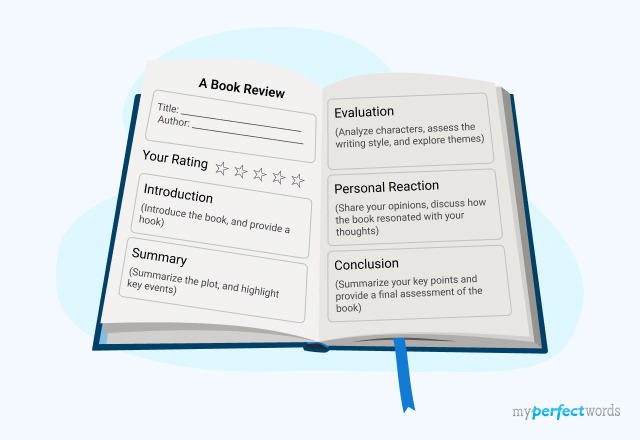
Once you’ve completed reading the book, it’s time to organize your thoughts. An organized review is clear and engaging for your readers. Here’s how you can structure your review:
1. Introduction
In the introduction, provide basic information about the book. This section should answer the “who, what, and where” of the book:
- Book Title: Include the title of the book and the author’s name.
- Publication Information: Mention the publisher, publication year, and any relevant context about the book’s release (e.g., if it’s part of a series or a debut novel).
- Brief Summary: Offer a short summary of the plot. This should be no more than a few sentences and should avoid spoilers. Focus on the main premise without giving away major twists or endings.
Example: “In The Silent Forest by Emily Blake, a young woman, Claire, returns to her childhood home in the remote countryside to uncover the truth behind her mother’s mysterious disappearance. Set in the eerie backdrop of an ancient forest, the novel weaves a gripping tale of secrets, betrayal, and haunting memories.”
2. Overview of the Plot
Next, discuss the plot in more detail. Describe the events of the story without giving away too much. Focus on the overall structure and how the story unfolds. Are there subplots that enhance the main plot? Did the book have any notable twists or surprises?
Tip: Avoid giving away major spoilers in this section. If a spoiler is necessary to discuss your opinion, consider including a spoiler warning.
3. Analysis of Characters
Characters are at the heart of any book. This section allows you to assess how well the author has developed the characters. Here’s what to consider:
- Main Characters: Discuss the protagonist and antagonist. Are they complex, relatable, or flat? How do they evolve throughout the book?
- Supporting Characters: Consider the secondary characters. Do they serve a clear purpose? Are they well-developed, or do they feel like filler?
- Character Relationships: Analyze how characters interact with one another. Do their relationships add depth to the story?
Example: “Claire is a multi-dimensional character whose personal growth is evident as she uncovers long-buried truths. Her journey is a compelling exploration of identity and self-discovery. The supporting characters, such as her childhood friend Lucas, provide emotional support but often seem underdeveloped in comparison.”
4. Evaluation of Writing Style
In this section, focus on the author’s writing style. Consider the following aspects:
- Tone and Voice: Is the writing tone formal, casual, humorous, or serious? How does the voice of the author align with the genre and themes of the book?
- Pacing: Was the book fast-paced, slow, or well-balanced? Did the story flow smoothly, or did it feel sluggish at times?
- Language: Evaluate the language used by the author. Was it descriptive? Did it draw you into the world of the book? Were there any memorable quotes or passages?
5. Themes and Messages
Every book conveys themes or messages, whether overt or subtle. Here are some things to consider:
- Themes: What are the primary themes explored in the book (e.g., love, friendship, revenge, identity, loss, etc.)?
- Message: Does the book convey a particular message or lesson? Is it thought-provoking, or does it serve primarily as entertainment?
- Relevance: Are the themes relevant to current societal issues or timeless in nature?
Example: “One of the most striking themes in The Silent Forest is the search for truth and the consequences of unearthing dark secrets. The book prompts readers to reflect on the importance of facing one’s past in order to move forward, a message that resonates on both personal and societal levels.”
6. Strengths and Weaknesses
After you’ve analyzed the key elements, now it’s time to share your overall opinion on the book. What did you love? What could have been better?
- Strengths: Highlight what the author did well. This could be the plot, character development, writing style, or emotional impact.
- Weaknesses: Discuss any areas that could have been improved. Was the pacing slow in certain parts? Did the character development feel incomplete? Were there plot holes or inconsistencies?
Example: “The book’s atmospheric setting and the suspenseful buildup of tension were excellent, keeping me hooked until the very end. However, the pacing in the middle felt slow, and some secondary characters lacked depth.”
7. Conclusion and Recommendation
In your conclusion, wrap up your review with a final opinion. Would you recommend the book? Who would enjoy it? Consider the following:
- Target Audience: Is this book suitable for a specific age group or demographic? Is it for fans of a particular genre?
- Recommendation: Would you recommend this book to others? Why or why not? If you recommend it, explain who might enjoy it the most.
Example: “Overall, The Silent Forest is a captivating psychological thriller that will appeal to fans of mystery and suspense. If you enjoy books with atmospheric settings and intricate character studies, this novel is definitely worth reading. However, readers who prefer fast-paced plots may find it slow at times.”
Step 3: Edit and Refine Your Review
Once you’ve written your review, it’s important to take the time to edit and refine it. Look for any areas where your writing can be clearer or more concise. Consider these editing tips:
- Check for Grammar and Spelling: Proofread your review for any errors in grammar, punctuation, or spelling.
- Clarity and Flow: Make sure your review flows logically. Are your points well-organized? Do they make sense in the order they appear?
- Avoid Spoilers: Ensure you haven’t accidentally given away any major plot points unless you’ve indicated a spoiler warning.
Conclusion
Writing a book review is a great way to engage with literature and share your personal reflections. By following the steps outlined in this guide, you can write a thoughtful and engaging review that not only helps you articulate your opinions but also provides valuable insight to others. Whether you’re writing a review for a class, a blog, or a literary magazine, the process of analyzing a book can be both rewarding and educational.
Remember, the key to a successful book review is balance—offering praise where it’s deserved and providing constructive criticism when necessary. With practice, you’ll become more confident and skilled at crafting insightful and compelling book reviews. Happy reading and reviewing!