
By Study Rhino
Throughout history, women have played essential roles in shaping the world we live in today. While traditional narratives have often focused on the achievements of men, a closer look at history reveals countless stories of brave, intelligent, and powerful women who have influenced politics, science, literature, social reform, and more. This article explores the evolving role of women throughout different historical periods and the impact they’ve made across cultures and continents.
Ancient Civilizations: Hidden Powers
In ancient times, women’s roles were often confined to the domestic sphere, but this didn’t mean they lacked influence. In fact, in many civilizations, women held significant positions—some even ruling entire empires.
Egypt: Queens and Deities
Ancient Egypt revered women in both royal and religious life. Queen Hatshepsut ruled as Pharaoh in the 15th century BCE and is remembered for her peaceful reign and massive building projects. The goddess Isis was one of the most worshipped deities, symbolizing motherhood and magic.
Greece and Rome: Voices in Shadows
In Ancient Greece, women had few rights but played vital roles in religion and family. Spartan women, unlike their Athenian counterparts, were trained in physical fitness and could own property. In Rome, Livia Drusilla, wife of Emperor Augustus, wielded behind-the-scenes political influence for decades.
The Middle Ages: Faith, Power, and Rebellion
During the medieval period (5th–15th centuries), women were often defined by their roles as daughters, wives, and mothers. Still, many rose beyond these roles to become religious leaders, queens, and revolutionaries.
Saints and Scholars
Women like Hildegard of Bingen became influential religious figures. She was a Benedictine abbess, visionary, composer, and writer whose works are still studied today. Joan of Arc, a teenage peasant girl, claimed divine visions and led French armies against English forces during the Hundred Years’ War. She was later canonized as a saint.
Royal Figures
Queens such as Eleanor of Aquitaine ruled vast territories and influenced politics in both France and England. Her patronage of the arts helped shape medieval European culture.
Renaissance and Enlightenment: Breaking Boundaries
From the 14th to 18th centuries, women began to push the boundaries of education, science, and the arts. Although most still faced legal and social restrictions, a few managed to shine through.
Intellectual Pioneers
Christine de Pizan, one of Europe’s first professional female writers, argued for women’s rights in her book The Book of the City of Ladies (1405). Margaret Cavendish, a 17th-century English writer and philosopher, published scientific theories at a time when few women had access to such knowledge.
Artistic Voices
Artists like Artemisia Gentileschi broke into the male-dominated world of Renaissance painting, producing dramatic and bold works that challenged societal norms and expressed women’s inner strength.
The 18th and 19th Centuries: Seeds of Change
As the world moved into the modern era, revolutions and industrialization began reshaping gender roles. Women increasingly demanded education, participation, and equality.
Revolutionary Women
During the American and French Revolutions, women such as Abigail Adams and Olympe de Gouges demanded rights for women. De Gouges’ Declaration of the Rights of Woman and of the Female Citizen was a powerful response to the male-centered French Revolution.
The Rise of Reformers
The 19th century saw the rise of reformers like Mary Wollstonecraft, whose work A Vindication of the Rights of Woman (1792) laid the foundation for feminist thought. In the U.S., Sojourner Truth, an abolitionist and women’s rights activist, gave her famous speech “Ain’t I a Woman?” in 1851, challenging racial and gender discrimination.
The 20th Century: Fighting for Equality
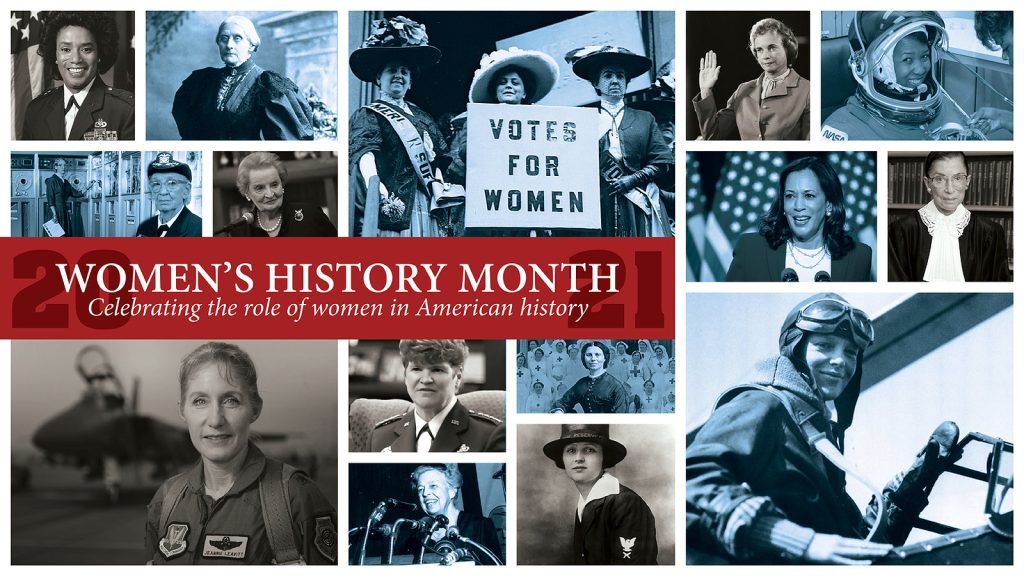
The 20th century marked a turning point. Women’s suffrage movements gained momentum across the globe, and two world wars reshaped the workforce and societal expectations.
Winning the Vote
Women’s suffrage became a global movement. In 1893, New Zealand became the first country to grant women the right to vote. In the U.S., the 19th Amendment (1920) guaranteed this right after decades of activism by women like Susan B. Anthony, Elizabeth Cady Stanton, and Alice Paul.
War and Work
During World War I and II, women took on roles in factories, farms, and even the military, proving their capabilities beyond the domestic sphere. In Britain, Rosie the Riveter became an icon of working women. After the wars, many were reluctant to return to previous limitations.
Civil Rights and Feminism
The mid-20th century witnessed a surge in civil rights and feminist movements. Leaders like Rosa Parks, Angela Davis, and Betty Friedan inspired millions to challenge racism, sexism, and classism. Friedan’s book The Feminine Mystique (1963) sparked the second wave of feminism, advocating for workplace rights, education, and reproductive freedom.
Global Contributions: Across Continents
While much of mainstream history has centered on Western women, women across Africa, Asia, Latin America, and the Middle East have made tremendous contributions as well.
Asia
In India, Rani Lakshmibai of Jhansi led armed resistance against British rule in 1857. In the 20th century, Indira Gandhi became India’s first female Prime Minister. In Pakistan, Malala Yousafzai, a Nobel Peace Prize laureate, advocates for girls’ education worldwide despite surviving an assassination attempt by the Taliban.
Africa
Wangari Maathai, a Kenyan environmentalist, became the first African woman to win the Nobel Peace Prize for her work on sustainable development and women’s rights. Historically, queens such as Nzinga of Ndongo and Matamba resisted Portuguese colonization in Angola with fierce leadership.
Latin America
Revolutionaries like Manuela Sáenz fought alongside Simón Bolívar in South America’s independence struggle. In Mexico, Frida Kahlo used art to challenge social norms and express pain, identity, and resistance.
Modern Era: Leadership and Legacy
Today, women continue to break barriers and lead change in all areas of life—from politics and business to science, sports, and the arts.
Politics and Leadership
Women like Angela Merkel (Germany), Jacinda Ardern (New Zealand), and Michelle Bachelet (Chile) have shown that women can lead nations with strength, compassion, and resilience. Kamala Harris made history as the first female Vice President of the United States in 2021.
Science and Innovation
Scientists such as Marie Curie (the first person to win Nobel Prizes in two different sciences) and Katherine Johnson (NASA mathematician whose calculations were vital to U.S. space missions) paved the way for modern women in STEM.
Today, initiatives like Girls Who Code, She Leads, and various women-in-tech conferences aim to increase female representation in tech and innovation sectors.
Arts, Sports, and Culture
In literature, Toni Morrison, Chimamanda Ngozi Adichie, and Arundhati Roy have contributed powerful narratives about identity, race, and gender. In sports, icons like Serena Williams and Simone Biles have redefined excellence and resilience.
Challenges Ahead
Despite progress, gender inequality persists in many parts of the world. Women still face barriers in pay, leadership opportunities, education access, and legal rights. Issues like domestic violence, child marriage, and lack of reproductive healthcare disproportionately affect women, especially in developing countries.
However, awareness is growing. Global movements like #MeToo and Time’s Up have amplified voices against harassment and discrimination, encouraging conversations that challenge outdated systems.
Conclusion: Remembering, Recognizing, and Rewriting
The role of women in history is not just about adding names to textbooks—it’s about recognizing that women have always been there: leading, teaching, building, and transforming societies. History is richer and more truthful when it includes the voices, struggles, and triumphs of women from all backgrounds.
As students, educators, and citizens, it’s our duty to not only learn about these women but to be inspired by them. Let’s ensure that history includes her story—equally and accurately.
At Study Rhino, we believe in empowering young minds with knowledge that shapes a more inclusive world. Keep exploring, keep questioning, and keep learning!