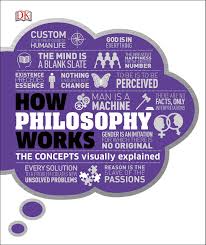

Philosophy, often referred to as the “love of wisdom,” is one of the oldest fields of study in human history. It seeks to answer fundamental questions about life, existence, knowledge, values, reason, and the mind. Far from being an abstract academic discipline, philosophy impacts our everyday decision-making, our understanding of the world, and our sense of morality. In this article, we at Study Rhino will walk you through the essential concepts of philosophy, offering a beginner-friendly introduction to this fascinating subject.
What Is Philosophy?
At its core, philosophy is the systematic study of fundamental questions. Unlike science, which often relies on empirical observation, or religion, which depends on faith, philosophy uses rational argumentation and critical thinking. Philosophers aim not just to ask questions but to carefully analyze and reason through possible answers.
The word “philosophy” comes from the Greek philo (love) and sophia (wisdom), meaning “love of wisdom.” Traditionally, philosophy is divided into several branches, each tackling different types of questions.
Major Branches of Philosophy
Understanding philosophy starts with becoming familiar with its main branches:
- Metaphysics
Metaphysics deals with the nature of reality and existence. It asks questions like:
- What is real?
- Do we have free will?
- What is the nature of time and space?
For example, metaphysicians debate whether the universe is made only of physical matter or whether there are immaterial substances like souls.
- Epistemology
Epistemology is the study of knowledge and belief. It addresses questions such as:
- What is knowledge?
- How do we know what we know?
- Can we trust our senses?
A key epistemological debate is between rationalism (the belief that reason is the primary source of knowledge) and empiricism (the belief that experience and observation are the primary sources).
- Ethics
Ethics explores morality and the principles of right and wrong. It asks:
- What should I do?
- What is the good life?
- Are there objective moral truths?
Philosophers like Aristotle, Immanuel Kant, and John Stuart Mill have proposed different frameworks, such as virtue ethics, deontology, and utilitarianism.
- Logic
Logic studies the rules of valid reasoning and argument. It helps us distinguish good arguments from bad ones. Formal logic uses symbols and formulas to represent arguments clearly.
For instance, a basic logical principle is:
- If A implies B, and A is true, then B must also be true.
- Aesthetics
Aesthetics examines the nature of beauty, art, and taste. It asks:
- What is beauty?
- Is art purely subjective?
- What makes something a work of art?
Artists and critics often use philosophical principles to evaluate creative works.
- Political Philosophy
Political philosophy investigates questions about government, justice, rights, and the role of individuals within society. Famous political philosophers like Plato, Locke, and Rousseau have shaped modern political systems with their theories.
Key Concepts in Philosophy
Now that we’ve outlined the main branches, let’s explore some of the most important philosophical concepts.
- The Socratic Method
Named after the ancient Greek philosopher Socrates, the Socratic Method involves asking a series of questions to stimulate critical thinking and expose contradictions in one’s beliefs. Socrates believed that through persistent questioning, individuals could arrive at truth and self-knowledge.
Example: Instead of telling someone what justice is, Socrates would ask them, “What is justice?” and then challenge their answers until they reached a deeper understanding.
- Dualism
Dualism is the idea that reality consists of two fundamentally different components: the physical (body) and the non-physical (mind or soul). This concept is famously associated with René Descartes, who said, “I think, therefore I am.” Descartes argued that the mind and body are distinct entities that interact with each other.
- Determinism vs. Free Will
Determinism is the idea that every event is determined by preceding events according to natural laws. If determinism is true, then it raises the question: do we really have free will, or are all our actions predetermined?
Philosophers have long debated whether humans are truly free agents or whether freedom is compatible with determinism (a position known as compatibilism).
- Utilitarianism
Utilitarianism is a moral theory that suggests that the right action is the one that maximizes happiness or pleasure for the greatest number of people. Jeremy Bentham and John Stuart Mill are the most famous proponents of this idea.
Example: A doctor saving five patients with five different organ failures by sacrificing one healthy person raises a utilitarian dilemma.
- Deontology
In contrast to utilitarianism, deontology is a theory developed by Immanuel Kant, which holds that the morality of an action is based on whether it adheres to rules or duties, rather than consequences. According to Kant, telling the truth is always the right thing to do, even if lying would produce better outcomes.
- Existentialism
Existentialism emphasizes individual freedom, choice, and responsibility. Philosophers like Jean-Paul Sartre and Simone de Beauvoir argued that humans create their own meaning in life through their choices, in a world that inherently has no pre-given purpose.
Famous Quote: “Existence precedes essence.” (Sartre)
- The Problem of Evil
The problem of evil challenges the existence of an all-powerful, all-good God in a world where evil exists. If God is all-good, He would want to eliminate evil; if He is all-powerful, He could eliminate evil. So why does evil persist?
Philosophers and theologians have proposed various solutions, including the idea that free will is necessary and that evil is a consequence of human freedom.
- The Allegory of the Cave
Plato’s Allegory of the Cave illustrates how education moves the soul from darkness (ignorance) into light (knowledge). In the story, prisoners are trapped in a cave seeing only shadows, and they mistake these shadows for reality. When one escapes, he sees the real world and realizes how limited his previous understanding was.
The allegory encourages questioning assumptions and seeking deeper truths beyond appearances.
Why Study Philosophy?
You might wonder: why should students today study philosophy? Here’s why:
- Critical Thinking: Philosophy sharpens reasoning skills and the ability to construct and deconstruct arguments logically.
- Communication: It enhances the ability to express complex ideas clearly and persuasively.
- Ethical Reasoning: In a world facing challenges like climate change, artificial intelligence, and bioethics, philosophical thinking about right and wrong is crucial.
- Self-Knowledge: Philosophy encourages introspection and self-awareness, helping individuals live more examined, purposeful lives.
Famous Philosophers to Know
Here are a few thinkers whose ideas have had a massive impact:
- Socrates: Focused on ethics and the art of questioning.
- Plato: Developed theories of forms and political philosophy.
- Aristotle: Made foundational contributions to logic, science, and ethics.
- René Descartes: Father of modern philosophy, famous for skepticism and dualism.
- Immanuel Kant: Revolutionized ethics and epistemology.
- Friedrich Nietzsche: Challenged traditional moral values with his idea of the “will to power.”
- Simone de Beauvoir: A key figure in existentialism and feminist philosophy.
Each of these thinkers opened new paths for philosophical inquiry and remains influential today.
Conclusion
Philosophy is not just an abstract discipline reserved for scholars—it is a vital, living tradition that influences our everyday lives. It invites us to question our assumptions, think deeply about right and wrong, and seek a clearer understanding of ourselves and the world around us.
By studying key concepts like metaphysics, epistemology, ethics, and political philosophy, we can develop critical tools that help us navigate an increasingly complex world.
At Study Rhino, we believe that philosophy is not about finding final answers but about cultivating a mindset of lifelong learning and inquiry. Whether you’re planning to study philosophy in-depth or simply want to sharpen your thinking, the journey into philosophy is one of the most rewarding you can take.
Would you also like me to create a quick “Key Terms Glossary” or a Quiz to pair with this article for even more student engagement? 🎓✨